Scaling Interview Quality Without Scaling Your Team
Scaling Interview Quality Without Scaling Your Team

Every enterprise that takes talent acquisition seriously has an ATS. Most have had one for over a decade. They have customized it, integrated it, trained their teams on it, and paid ongoing subscription fees that would make a CFO uncomfortable if they looked too closely.
And yet, hiring quality has not improved proportionally. Time-to-hire has not decreased. The signal gap, the distance between what a candidate claims and what they can actually deliver has not closed.
The problem is not that the ATS is broken. The problem is that organizations have been asking the ATS to do something it was never designed to do.
What the ATS Actually Does
The ATS is a system of record. Its job is to store, track, and move candidates through defined workflow stages. It captures applications. It manages job postings. It stores resumes. It sends notifications. It generates compliance documentation.
These are administrative functions and the ATS performs them well.
What the ATS does not do and what it was never designed to do is think. It does not evaluate candidate capability. It does not compare candidates against each other using structured signals. It does not predict hiring outcomes. It does not learn from the correlation between who was hired and how they performed.
The ATS is your filing system. It is not your decision-making engine.
The Gap Between Data and Intelligence
Here is the architectural reality of the modern hiring stack:
Your ATS is sitting on top of an enormous amount of raw hiring data, resume data, interview notes, stage progression timelines, offer outcomes, rejection reasons. This data represents years of organizational learning about what good talent looks like for your specific roles.
Almost none of it is being used.
Not because the data is worthless. But because the ATS has no intelligence layer to transform that data into decisions.
This is the gap. And it is widening.
As hiring volumes increase, as AI-generated resumes make keyword screening worthless, as candidate pools grow more complex and role requirements more specialized, the gap between what your ATS stores and what your hiring team actually needs to know is becoming a strategic liability.
Introducing the Hiring Intelligence Layer
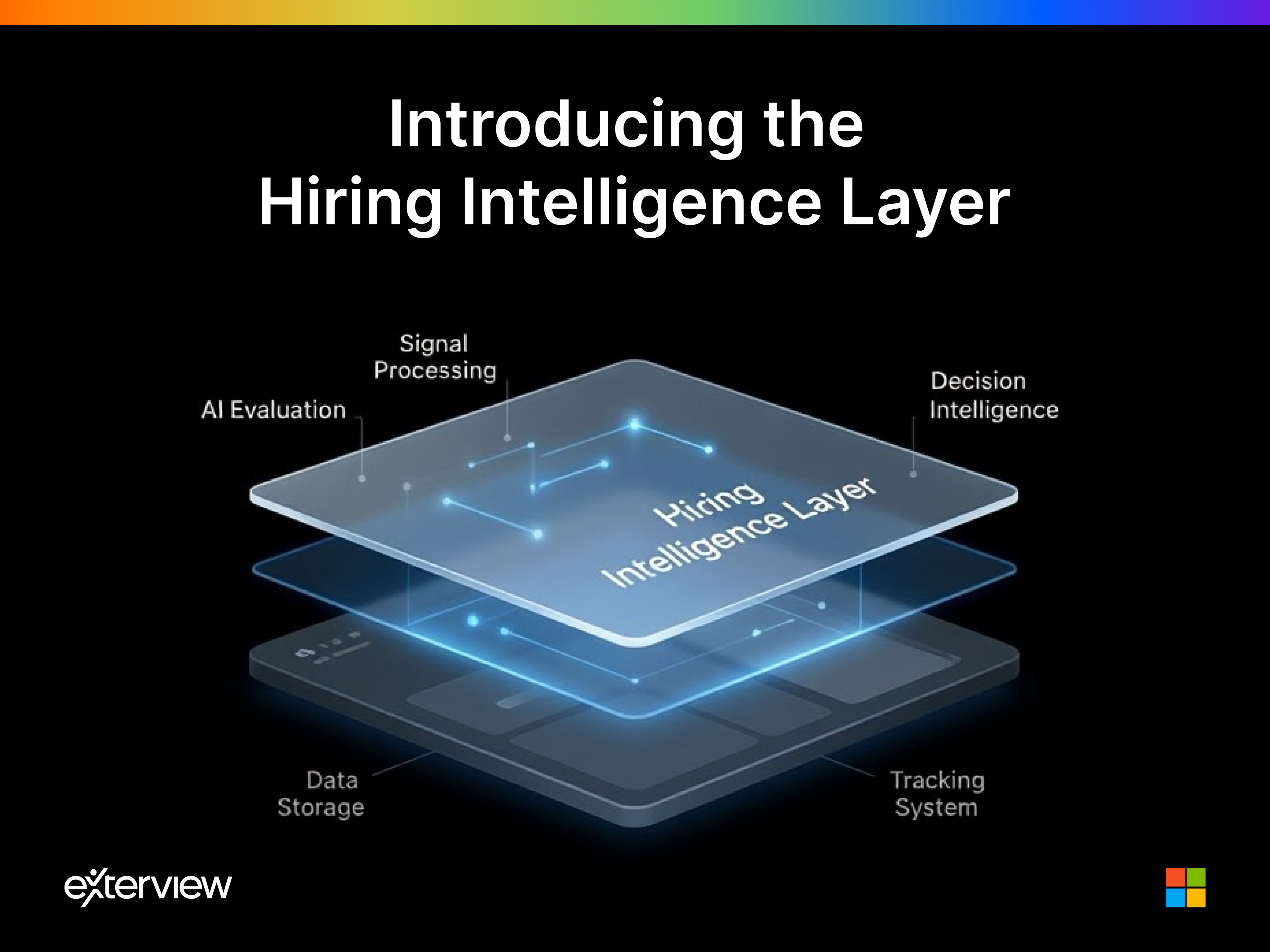
The Hiring Intelligence Layer is a new architectural concept in the enterprise talent stack. It sits above the ATS, not replacing it, not competing with it. But transforming what the ATS stores into something the organization can actually act on.
Think of it this way:
- The ATS is your database. It stores the facts: who applied, when they applied, what stage they reached.
- The Hiring Intelligence Layer is your analyst. It reads those facts, combines them with real-time evaluation signals, and produces ranked, scored, explainable recommendations.
The ATS answers: "Who is in our pipeline?"
The Hiring Intelligence Layer answers: "Who in our pipeline should we hire, and why?"
How Exterview Plugs Into Your Existing Stack
Exterview is built as an intelligence layer, not as a replacement system. This is a deliberate architectural decision.
Enterprise organizations have made significant investments in their ATS infrastructure. Replacing an ATS is a 12 to 24 month undertaking that disrupts recruiting operations, compliance processes, and reporting workflows. It is a project that most CHROs are not willing to initiate without overwhelming justification.
Exterview does not require that conversation.
Instead, Exterview connects to your existing ATS through standard API integrations and begins layering intelligence on top of your current workflow:
- Job Definition Intelligence: Exterview analyzes role requirements and translates them into structured competency frameworks before sourcing begins.
- Candidate Ranking: Applicants are scored against structured capability criteria, not keyword density.
- AI Screening Interviews: Automated screening interviews capture structured competency signals at scale, eliminating the bottleneck of first-round human scheduling.
- Interview Intelligence: Human panel interviews are enhanced with structured question guides and automated signal capture.
- Hiring Recommendations: Cross-signal analysis produces ranked candidate recommendations with confidence scores and audit trails.
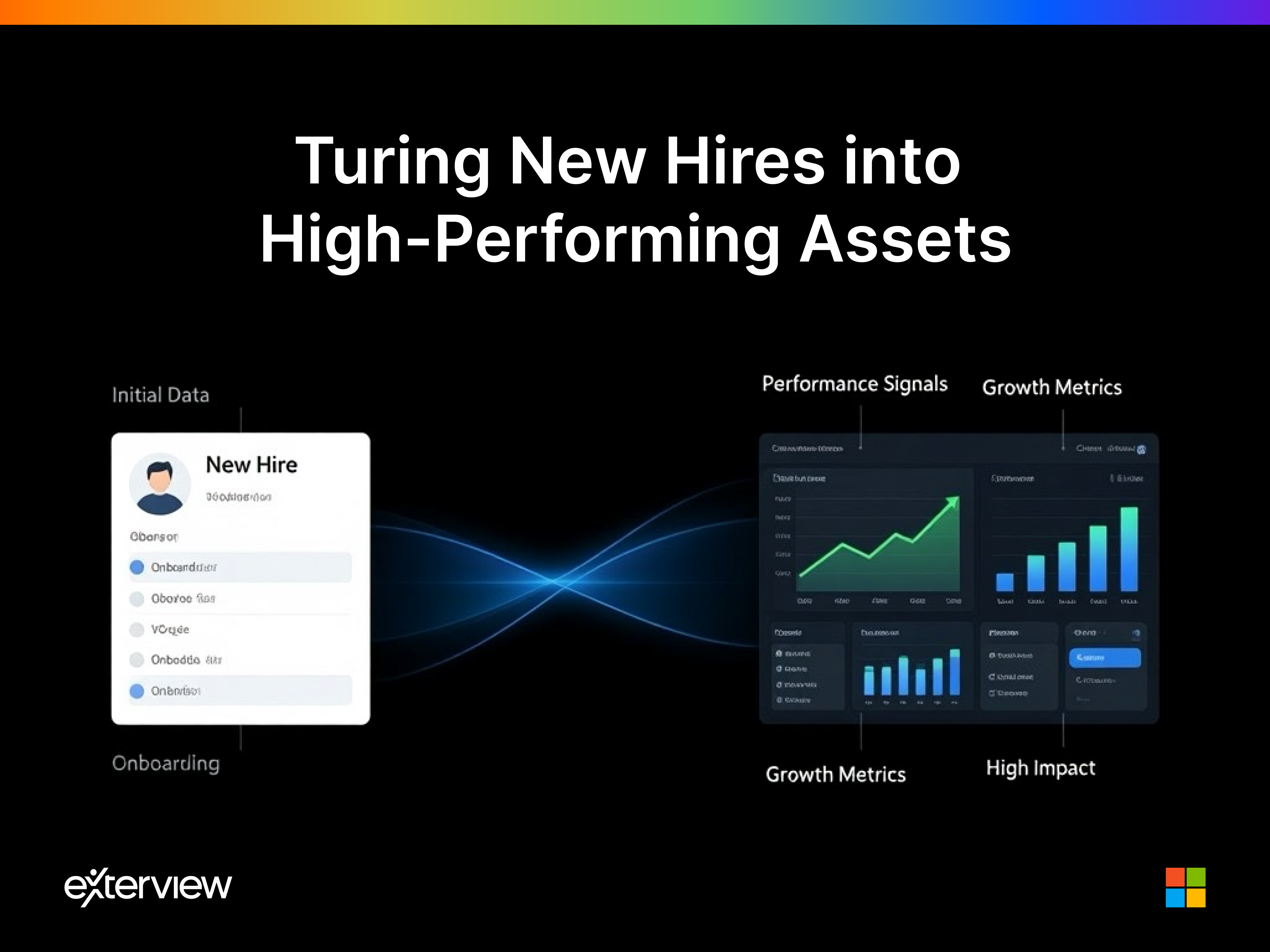
- Probation Intelligence: The signal loop extends past offer acceptance into 90-day performance tracking, creating a feedback mechanism that makes every future hiring decision smarter.
Why the Intelligence Layer Is the Right Architectural Model
The Hiring Intelligence Layer model solves a problem that replacement platforms never could: organizational adoption.
Recruiters do not need to learn a new ATS. Hiring managers do not need to change how they submit job requisitions. Compliance teams do not need to re-certify a new system of record.
Exterview sits above all of that, surfacing intelligence where it is needed, when it is needed, without disrupting the workflows that enterprise teams depend on.
This is not a feature advantage. It is an architectural advantage. One that makes Exterview deployable in weeks rather than years, and value-generating from the first interview cycle.
The New Stack Model
Your ATS stores what happened. Exterview learns what it means.
The era of treating your ATS as your hiring strategy is ending. The organizations that build an intelligence layer above their record system will hire faster, more accurately, and with far less risk. Exterview is that layer.
Ready to understand what your hiring data has been trying to tell you?