
- Screening
- Evaluation
- Decision
- Offer
- Assimilation
Evaluation
Assess engineering capability through practical work
Evaluate how candidates write, debug and explain software. Use role-relevant tasks to examine engineering judgment, including how they review AI-assisted work.
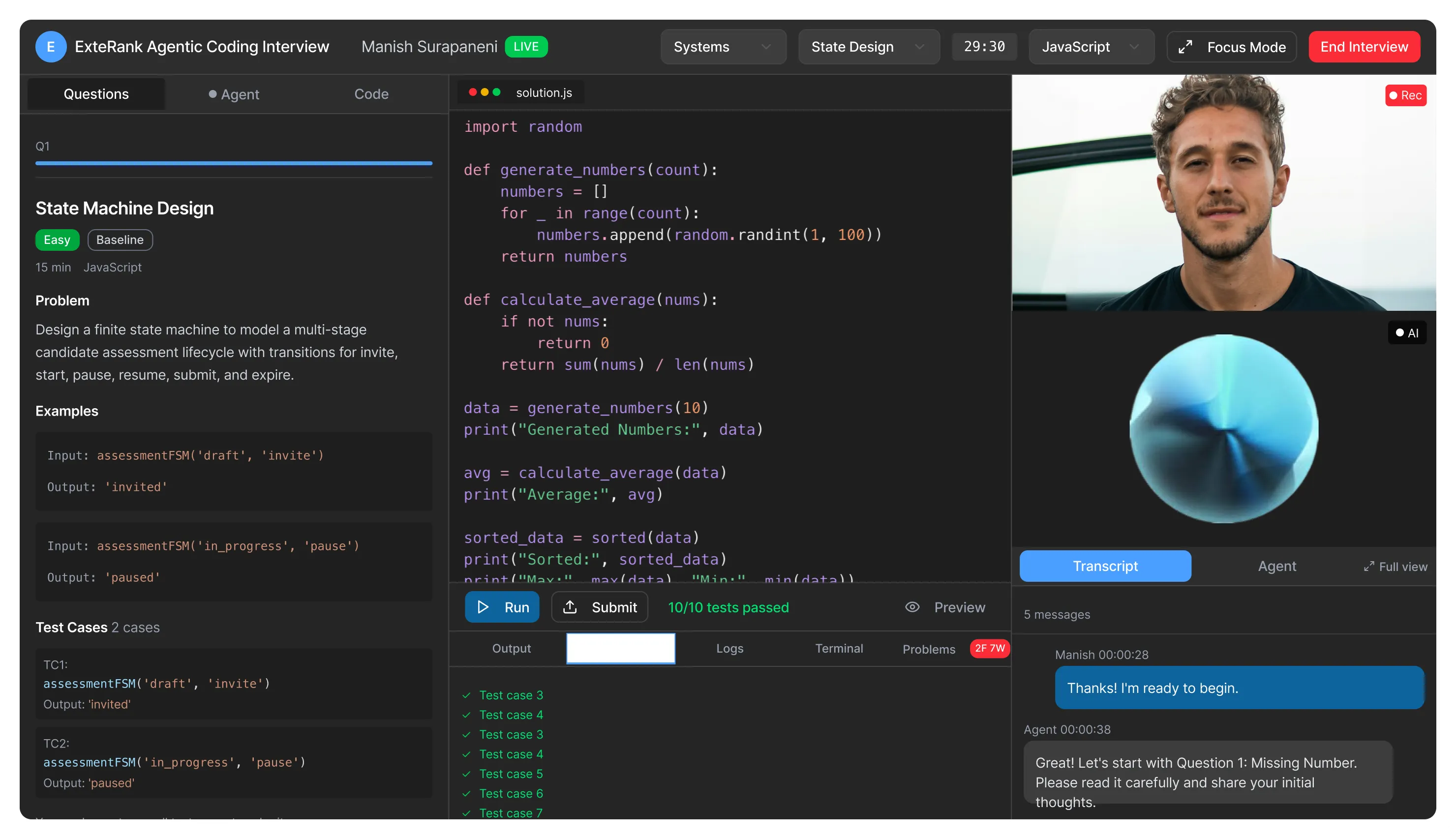

Built for the Agentic Engineering Era
Role-relevant exercises
Choose tasks aligned with the role’s engineering needs.
.png)
Coding and debugging
Review implementation choices and problem-solving.
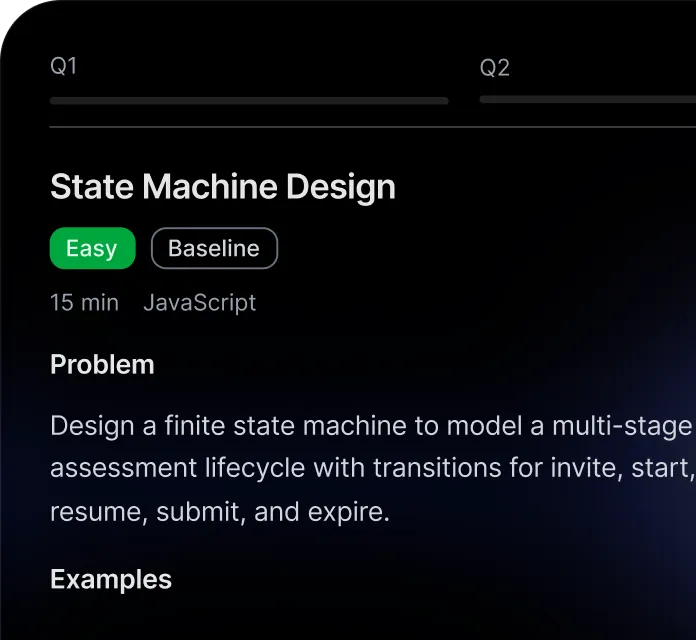
Architecture reasoning
Explore trade-offs and technical constraints.
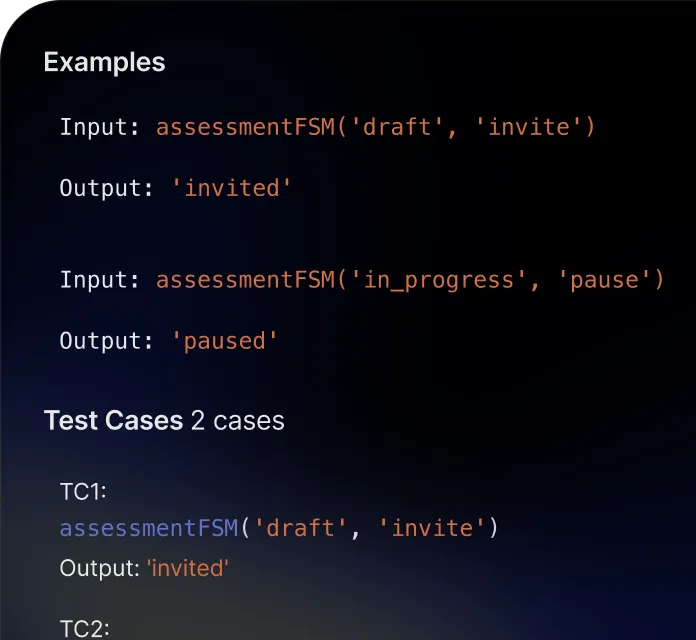
AI-assisted work
Assess how candidates verify AI-generated output.

Artifact review
Keep the submitted work alongside the evaluation criteria.
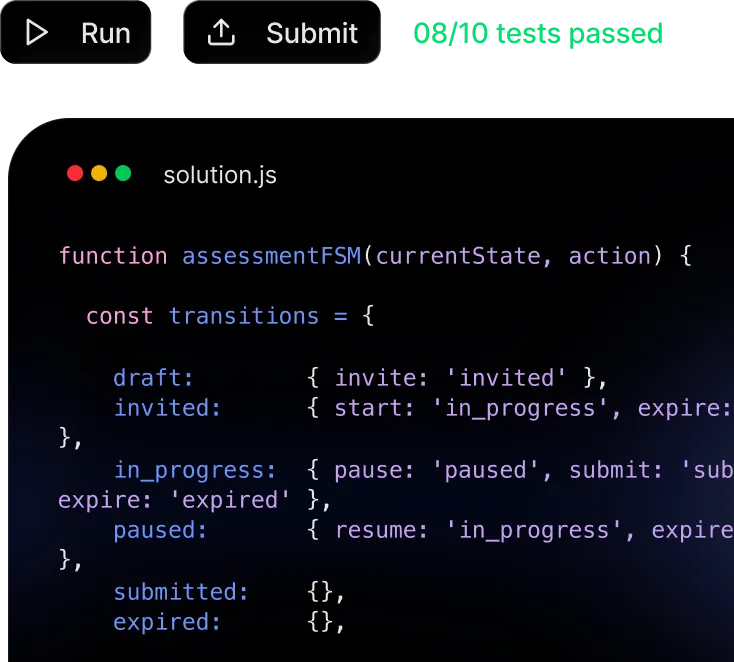
Technical handoff
Give panelists evidence and targeted follow-up questions.
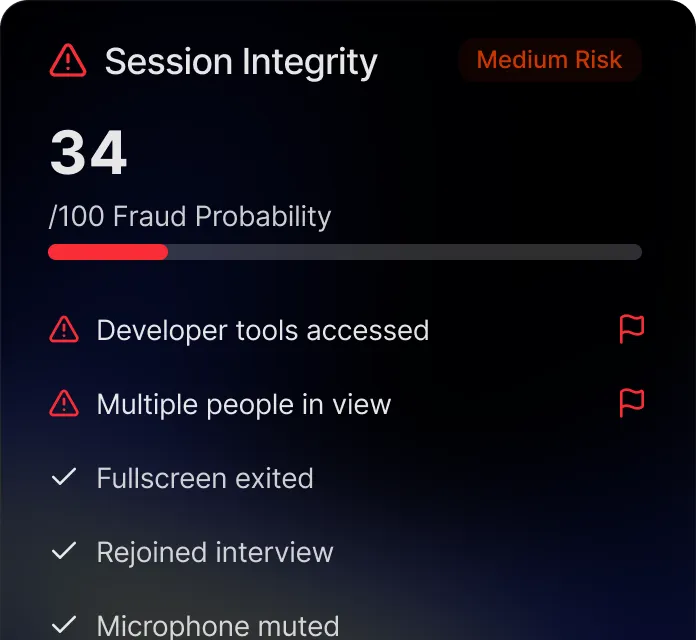
Inspect the work and the decisions behind it
Technical assessment should reveal how someone approaches the work your team needs done. Tasks, submitted artifacts and explanations provide a stronger review basis than an isolated score.
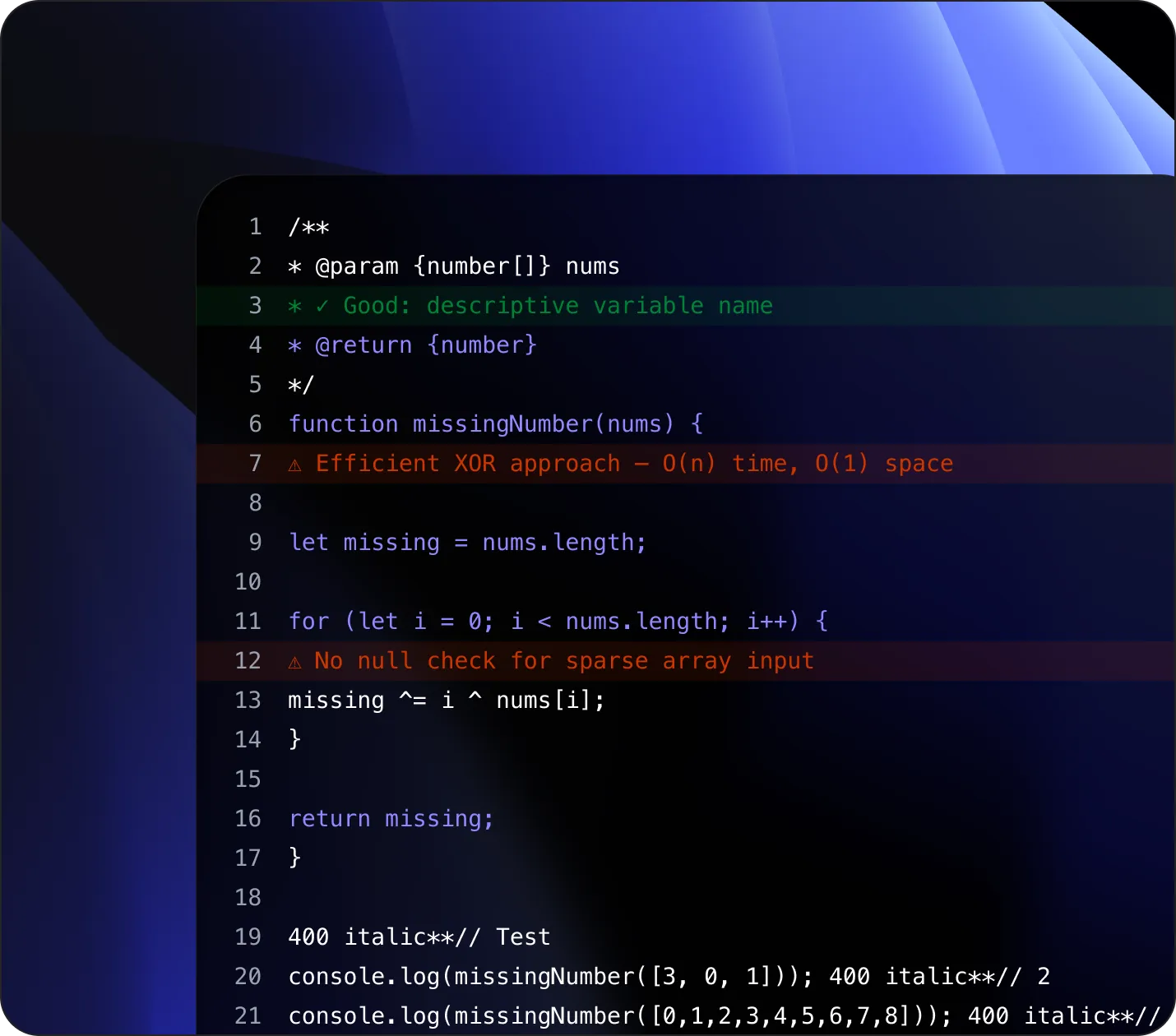
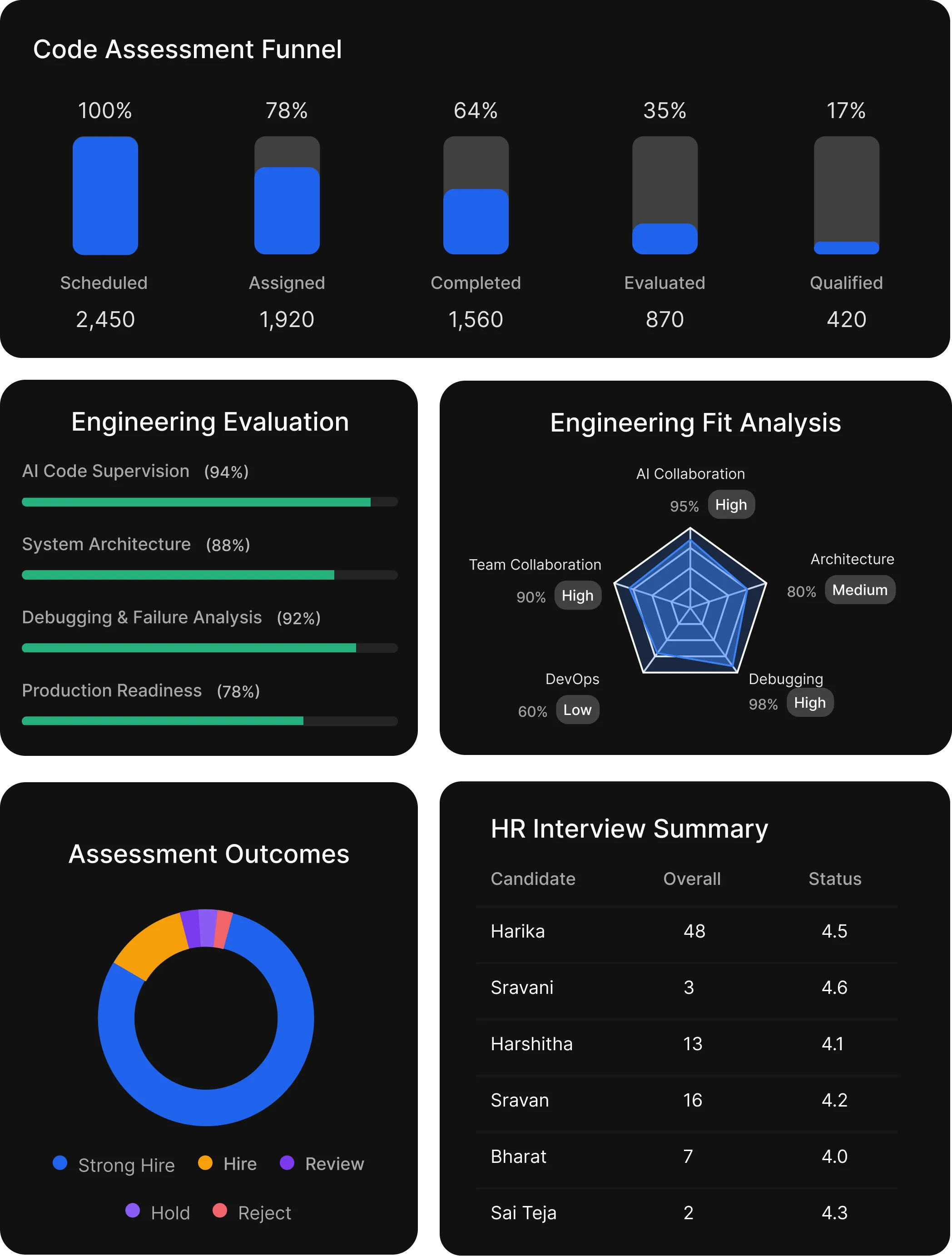
Technical evidence that supports a deeper panel review
Review submitted work, engineering decisions and criteria-based findings before the next technical conversation.
The solution or artifact produced during the exercise.
The candidate’s explanation of trade-offs and implementation choices.
Findings connected to the responsibilities being assessed.
Panel questions
Specific areas to explore further with a human technical reviewer.
Frequently asked questions
Can candidates use AI tools?
The assessment policy should state whether AI tools are permitted and how their use will be evaluated before the exercise begins.
Does this replace every algorithm assessment?
No. The task should match the role. Algorithmic skills may matter for some roles; production reasoning, debugging or architecture may matter more for others.
What should a reviewer inspect?
The submitted artifact, the task requirements, relevant reasoning and the evidence supporting the evaluation.
Who makes the technical hiring recommendation?
The assigned reviewers use the assessment evidence within the organization’s hiring process.
