Skip to content

HIRING ANALYTICS

Measure hiring against your own baseline.

Track time to shortlist, recruiter hours per role and candidate progression from the work already in the workflow. Your leaders decide what to change.

WHY IT MATTERS

Insights that drive smarter hiring decisions
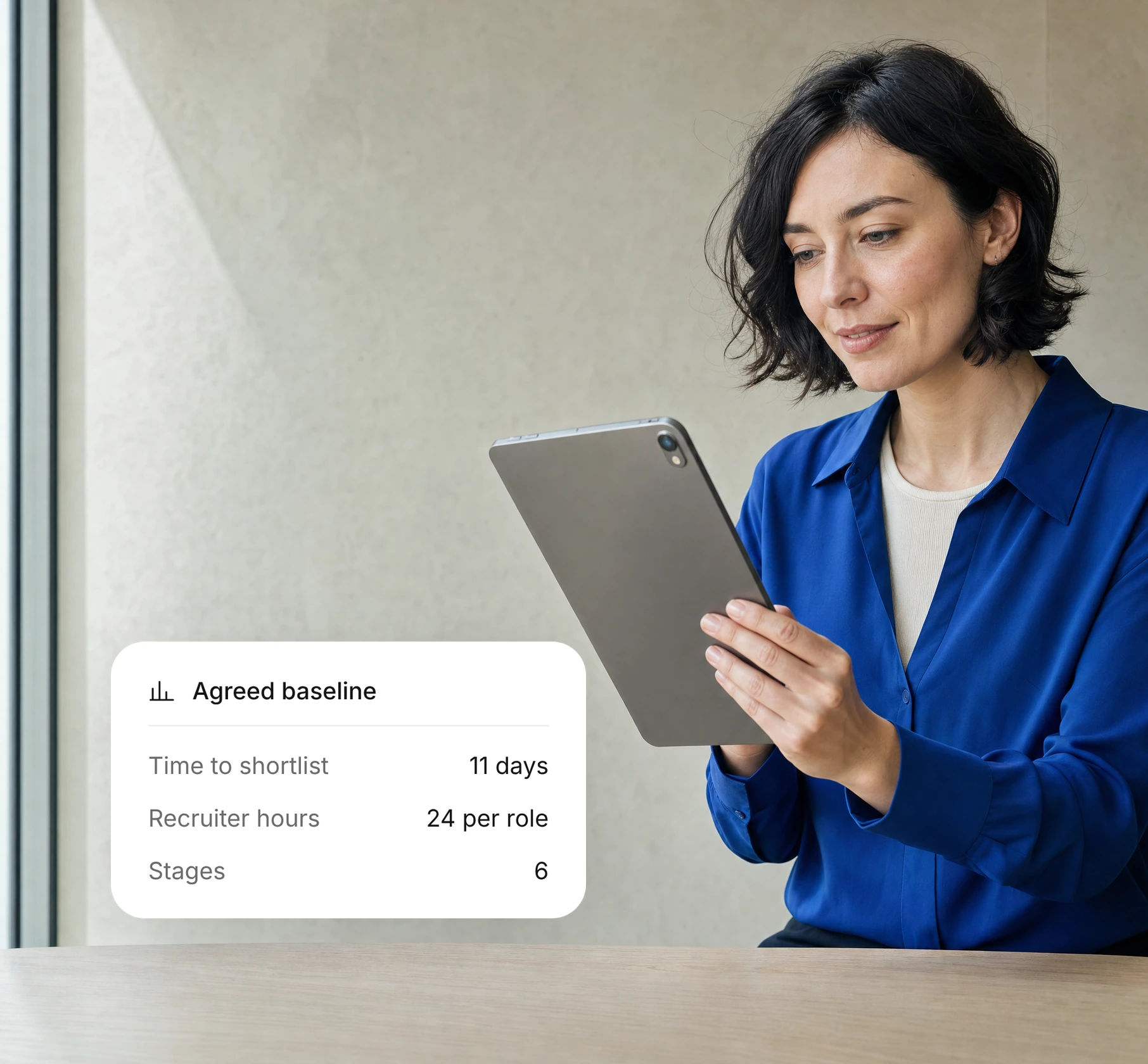
A baseline you agree

Your team sets the starting measures before anything changes.

Interview Reports

01

Shortlist readiness

See how long it takes to reach a reviewed shortlist for each role.

02

Recruiter effort

Track recruiter hours per role against your starting baseline.

03

Progression

Follow how candidates move through each stage and where they stop.

The AI employees behind hiring analytics

Report Analyst AI employee

Report Analyst

Answers questions about a candidate report with citations.

Insight and governance

View role
People Analyst AI employee

People Analyst

Explains enterprise pipeline health and bottlenecks.

Insight and governance

View role
Data Steward AI employee

Data Steward

Supports clean records, consent and retention.

Insight and governance

View role

HOW IT WORKS

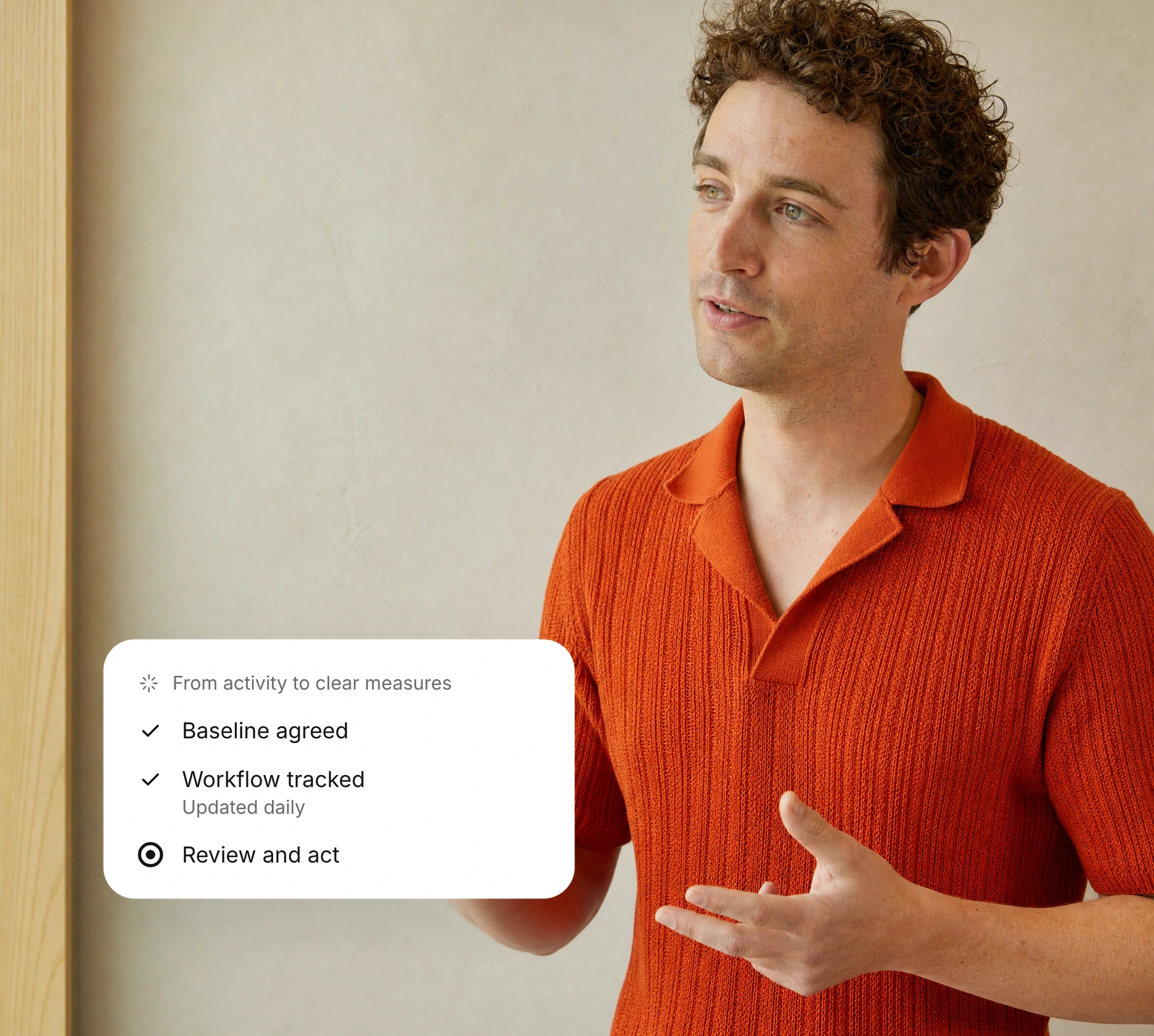
From workflow activity to clear measures
01

Agree the baseline

Collaborate with your team to establish hiring roles, define process stages, and set baseline performance metrics.

02

Track the workflow

Metrics automatically reflect progress across screening, interviews, and hiring decisions, keeping your team informed at every stage.

03

Review and act

Your leaders analyse hiring trends, identify opportunities for improvement, and make informed decisions to optimise recruitment performance.

HUMAN CONTROL

Analytics reports. Your leaders decide.

01

Set the measures

Your team agrees what to track and how each measure is defined.

02

Control access

Decide who can see which reports and data.

03

Check the data

Data Steward flags gaps so reviewers can trust what they see.

Continue the hiring workflow

01Connect your systems

Interview Reports

Review consolidated interview scores, candidate feedback, and performance insights.

Decision Room

Review candidate evidence and align on informed, accountable hiring decisions.
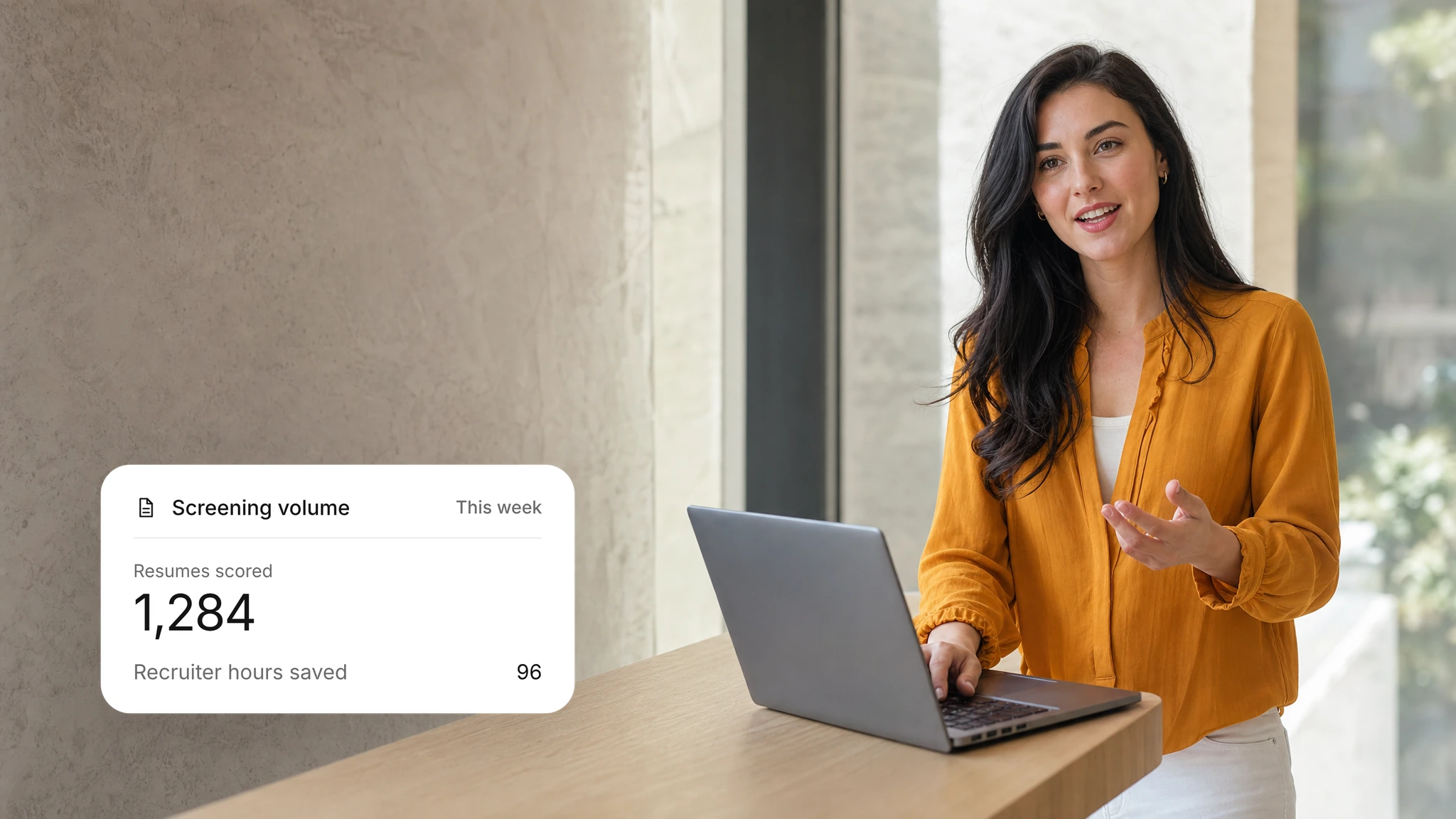
Resume Screening

Evaluate resumes against role requirements to identify qualified candidates.

FAQ

Analytics questions

What to know about setup, rollout and who makes the decisions.
What does hiring analytics measure?
Time to a reviewed shortlist, recruiter hours per role and candidate progression, against a baseline your team agrees.
Are these measures guaranteed results?
No. They are measures to evaluate the workflow, not promised improvements.
Which AI employees support analytics?
People Analyst explains pipeline health, Report Analyst summarises results, and Data Steward checks data quality.
Do analytics replace candidate review?
No. Reporting helps you evaluate the workflow. People still review candidates and make hiring decisions.
What do we need to get started?
The roles to track, your starting measures and named report owners.
What reporting scope should we confirm?
Agree data sources, measure definitions and access requirements with our team.
How should we define evaluation criteria?
Agree on the role requirements and how candidates will be scored before you start. Your team approves the criteria and makes every hiring decision.
What should we discuss before rollout?
Walk through scope, users, integrations, data handling and success measures with our team before you agree a rollout plan.
How should candidate information be reviewed?
Review the scores and interview notes against your hiring policies. A recruiter checks gaps and open questions before deciding the next step.
Where can we review security information?
Start with the Trust Center, then walk through your security review with our team.
How are uncertain results handled?
Treat missing or unclear information as a question to investigate. Ask the candidate for clarification through the appropriate hiring step.
What should our team confirm about data handling?
Agree on access, retention and deletion rules with our team before you share candidate data or connect your systems.