
SOLUTIONS
AI hiring for Fortune 500 talent teams
Run a consistent hiring workflow across business units while keeping local approval and policy requirements visible. Start with one role family, review integrations and data handling, then expand after the pilot meets your criteria.
Demo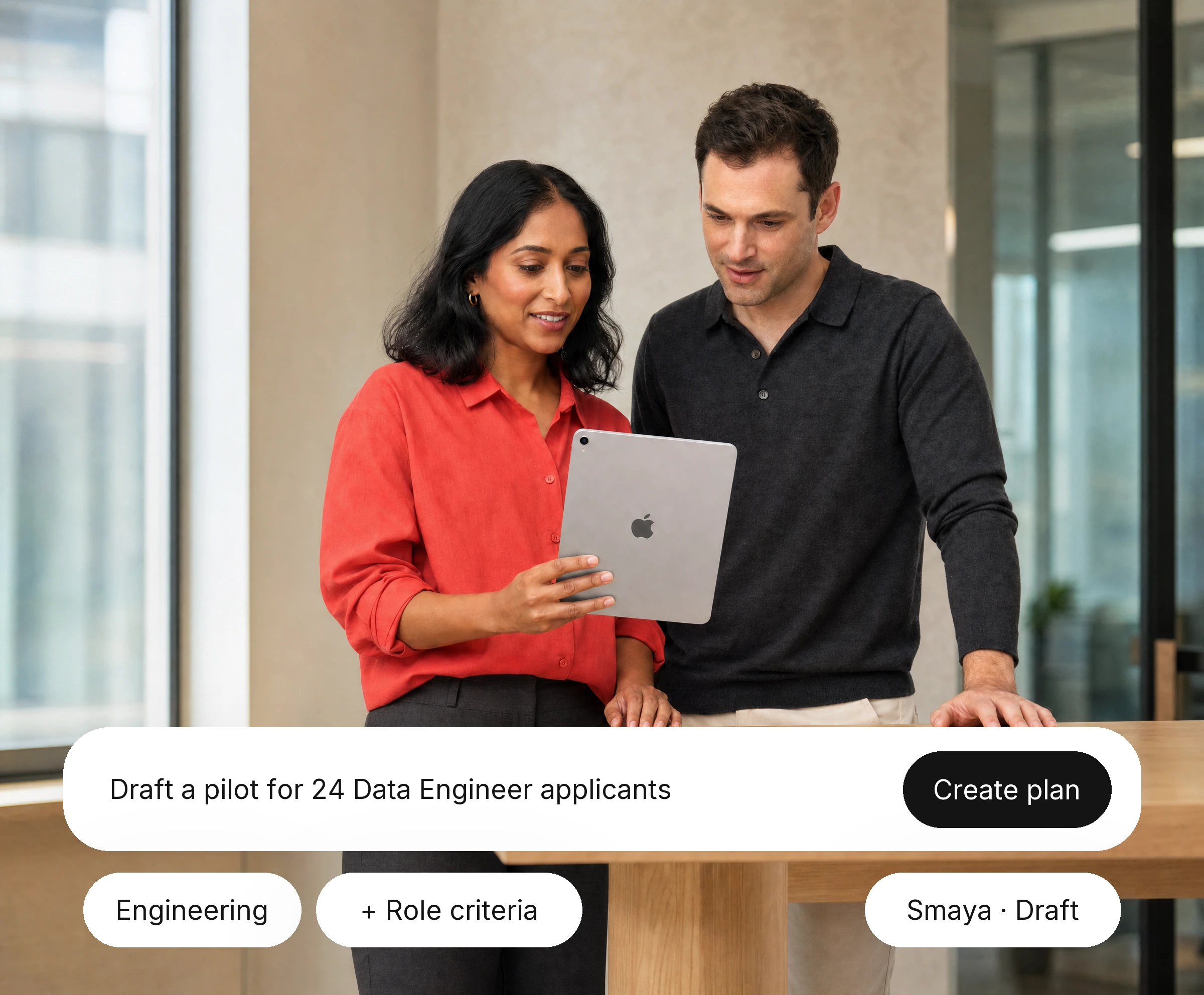
Coordinate hiring across business units
01Connect your systems
Align hiring goals
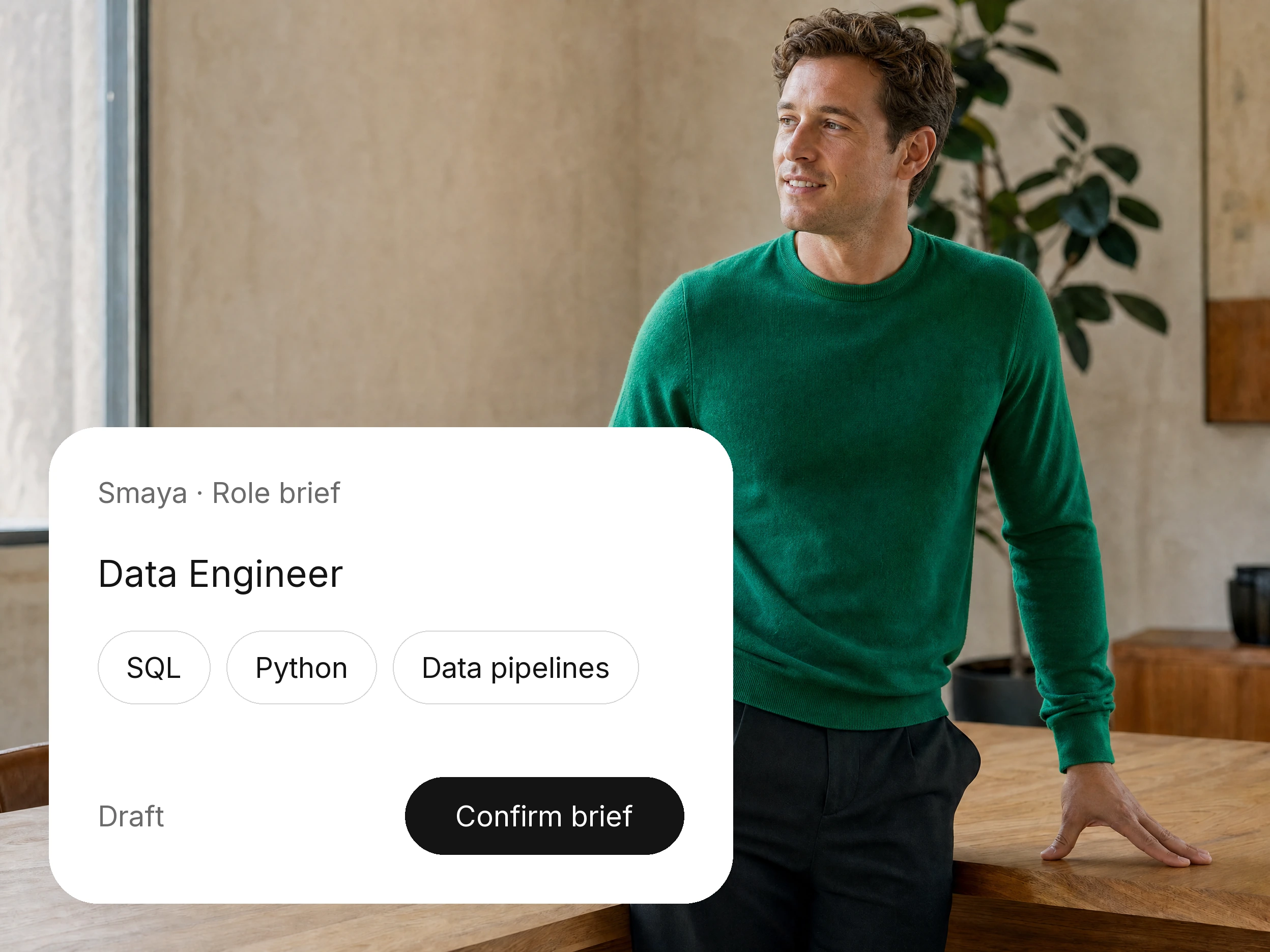
Turn growth priorities into workforce plans, role requirements, and structured hiring workflows.
02Plan your rollout
Connect hiring teams
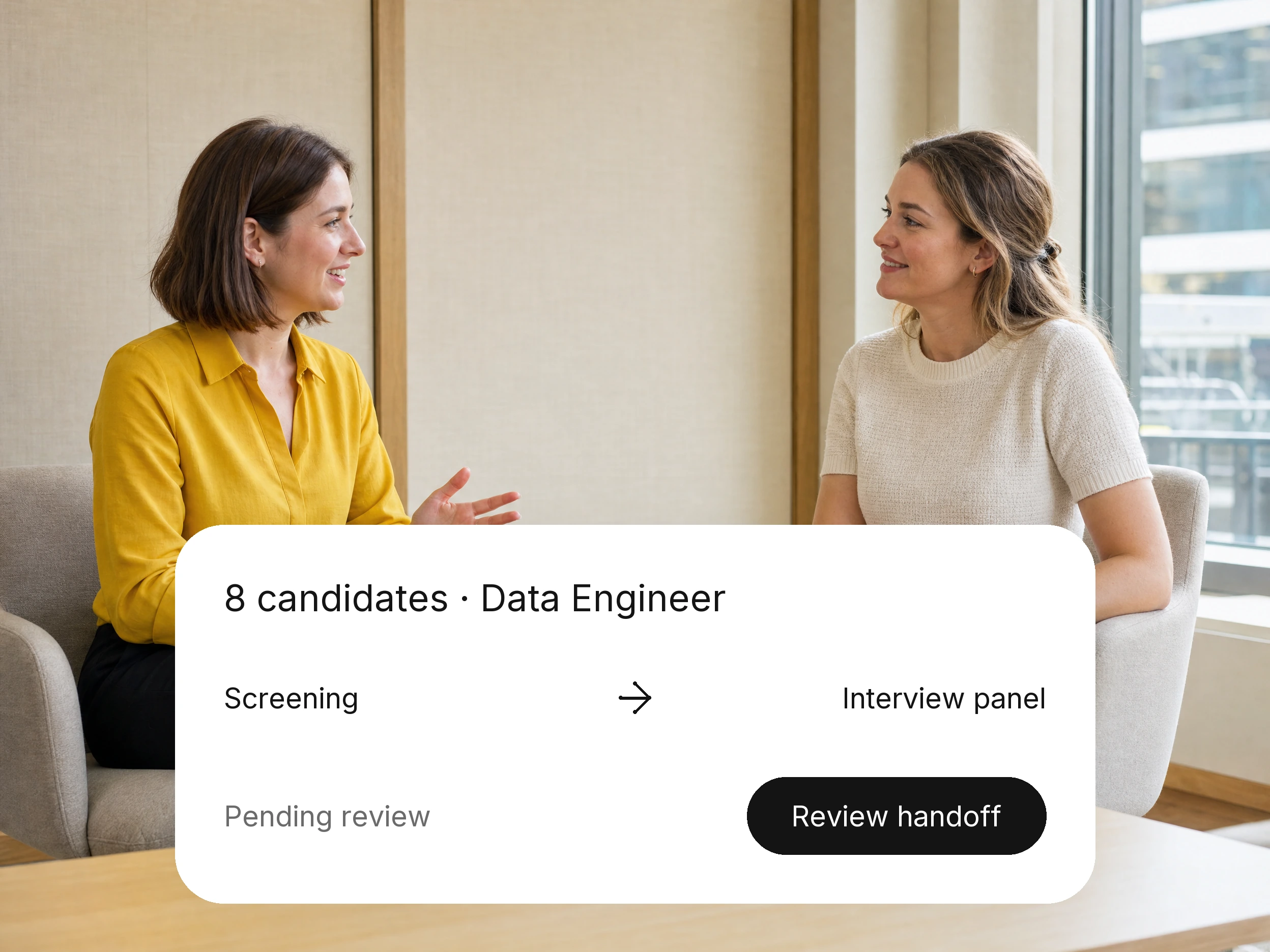
Connect sourcing, screening, and interviews across business units.
03Find your hiring workflow

Measure hiring impact
Track hiring performance, consistency, and efficiency across the enterprise.
Validate enterprise hiring before scaling
01
Initial workflow
Select a priority hiring workflow with clear business ownership and defined success criteria.
02
Measure performance
Track hiring efficiency, candidate quality, and stakeholder feedback.
03
Scale with confidence
Expand proven workflows across business units based on measurable results.
FAQ
Fortune 500 rollout questions
What to know about setup, rollout and who makes the decisions.
Where should a Fortune 500 hiring pilot start?
Where should a Fortune 500 hiring pilot start?
Choose one enterprise role family and define the hiring workflow, review owners and baseline measures.
Can every team use the same rubric?
Can every team use the same rubric?
Use a shared foundation, then adapt criteria to each role's actual responsibilities and evidence requirements.
When should we expand to another business unit?
When should we expand to another business unit?
After the initial workflow demonstrates fit and the enterprise confirms controls, ownership and capacity for expansion.
How should we plan a rollout across regions?
How should we plan a rollout across regions?
Confirm which regions and business units are in scope, what integrations they use, and who owns data handling and local approval requirements.
What should central talent acquisition and business-unit teams agree on?
What should central talent acquisition and business-unit teams agree on?
Agree on role demand, system permissions, policy boundaries, reporting, and who can approve progression and offers for each business unit.
How should we measure the operating model?
How should we measure the operating model?
Review time to a panel-ready shortlist, recruiter effort and progression quality. Track adoption separately from projected hiring capacity.
How should we define evaluation criteria?
How should we define evaluation criteria?
Agree on the role requirements and how candidates will be scored before you start. Your team approves the criteria and makes every hiring decision.
What should we discuss before rollout?
What should we discuss before rollout?
Walk through scope, users, integrations, data handling and success measures with our team before you agree a rollout plan.
How should candidate information be reviewed?
How should candidate information be reviewed?
Review the scores and interview notes against your hiring policies. A recruiter checks gaps and open questions before deciding the next step.
Where can we review security information?
Where can we review security information?
Start with the Trust Center, then walk through your security review with our team.
How are uncertain results handled?
How are uncertain results handled?
Treat missing or unclear information as a question to investigate. Ask the candidate for clarification through the appropriate hiring step.
What should our team confirm about data handling?
What should our team confirm about data handling?
Agree on access, retention and deletion rules with our team before you share candidate data or connect your systems.