The Attrition Crisis No One in Pharma Manufacturing Is Measuring Correctly
Why pharma attrition metrics fail in manufacturing — and how agentic AI captures the signals HR systems miss.

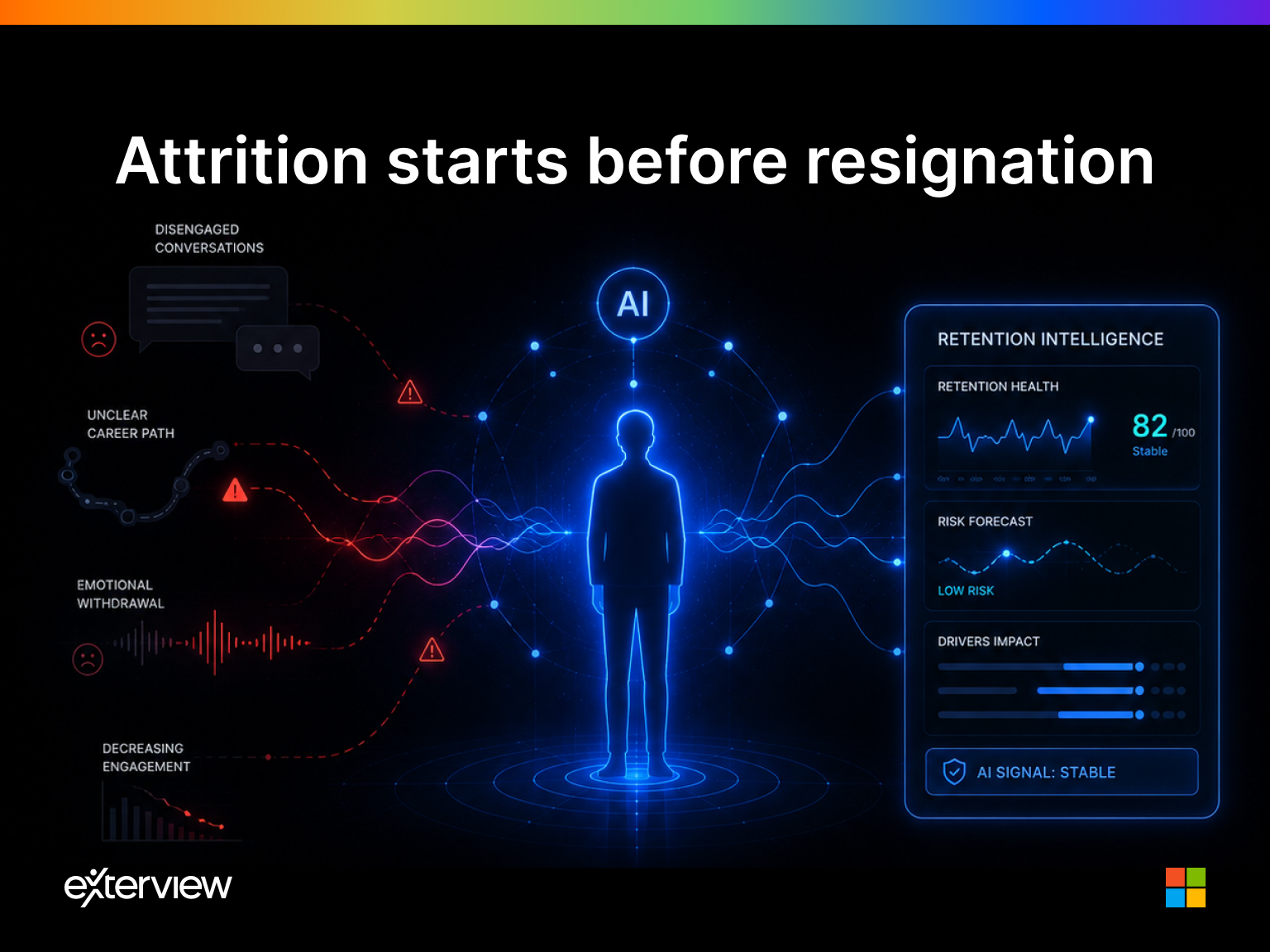
Every pharmaceutical manufacturing organisation tracks attrition. Headcount reports are generated monthly. Exit interview summaries are compiled quarterly. HR leadership reviews turnover percentages in annual workforce planning cycles. The data exists. The problem is that the data arrives after the event it is supposed to prevent has already occurred.
A resignation is not the beginning of the attrition story. It is the final chapter. The employee who submits their resignation letter on a Friday afternoon in March has, in most cases, made their decision weeks or months earlier, during a moment of frustration with a supervisor, during a conversation with a peer who told them what a competitor is paying, during a shift where they realised that the career path they were told existed does not actually lead anywhere they want to go. By the time the formal notice arrives, the organisation has missed every point in the story at which it could have intervened.
This is the attrition crisis in pharmaceutical manufacturing. Not the headline turnover number, but the systematic failure to capture the signals that precede it.
Why Pharma Manufacturing Attrition Is Not an HR Problem
In most industries, attrition is expensive but recoverable. A vacancy creates recruiting and onboarding costs, a temporary productivity gap, and some institutional knowledge loss. The organisation absorbs the cost and moves forward.
In pharmaceutical manufacturing, attrition from trained shopfloor roles carries a dimension that most workforce analytics frameworks do not model: regulatory continuity risk.
A trained production associate who leaves a regulated manufacturing environment does not just take their skills with them. They take their qualification history. Equipment qualification in a CGMP environment is person-specific, the operator who is qualified to run a particular granulator under a specific SOP is documented by name. When that person leaves, the qualification must be performed again for their replacement. During the period between the departure and the completion of requalification, that equipment's throughput may be constrained, the batch documentation chain is interrupted, and the facility's validated state is technically incomplete.
In high-volume production environments, this is not a theoretical risk. It is a practical consequence of every departure from a qualified role, and its cost is not captured in any turnover metric that HR generates, because it lives in the operational and quality budget, not the headcount budget. The real cost of attrition in pharmaceutical manufacturing is therefore consistently underreported, and the urgency of preventing it is consistently underestimated.
What Exit Interviews Actually Measure
The exit interview is the primary tool most pharmaceutical organisations use to understand why people leave. It is also, structurally, the least informative tool available for that purpose.
The exit interview is conducted after the resignation decision has been made. The employee participating in it has already accepted another offer, or made the psychological transition to leaving, or both. Their incentive to be candid about the real reason for their departure is low, they want a reference, they want their full-and-final settlement processed without friction, and they do not want to create a conflict in their final weeks that follows them into their next role. The result is that exit interviews systematically underreport the most consequential attrition drivers: supervisor relationship failures, compensation dissatisfaction relative to external benchmarks, and the perception that career development is not genuinely available.
These drivers do not appear in exit interview summaries because employees do not say them in exit interviews. They say them to their peers, in the canteen, at the end of night shifts, three months before the resignation letter is written. And then they write the letter.
The Signal Is There. The Infrastructure to Capture It Is Not
The attrition signal, the language, the sentiment, the expressed dissatisfaction,is present in the workforce well before any formal departure process begins. Employees who are considering leaving do not hide this signal. They express it, in the way they respond to direct questions, in the specific words they use when describing their relationship with their supervisor, in their answer to a question about whether they see themselves at the organisation in six months.
The problem is that no one is asking. And the reason no one is asking is that the existing tools for asking the manager check-in, the annual engagement survey, the HR open-door conversation, are structurally insufficient for the manufacturing workforce.
The manager check-in is only as effective as the manager's relationship with the employee. In cases where the manager is the primary attrition driver, which research on shopfloor attrition in manufacturing consistently identifies as one of the top two causes of departure the check-in cannot surface the signal because the employee will not disclose it to the source of the problem.
The annual engagement survey captures a snapshot at a single moment in time, processed into aggregate data weeks later, at a granularity that has lost all individual signal. Knowing that thirty-two percent of production associates in Unit B rated career growth as unsatisfactory does not tell you which thirty-two percent are close to leaving, which ones can be retained by a development conversation, and which ones are already interviewing elsewhere.
The HR open-door conversation assumes that employees who are struggling will self-identify and seek out support. In a shopfloor manufacturing environment with a hierarchical culture, a high-discipline regulatory framework, and a workforce that has learned to raise only the concerns that will be acted upon, this assumption fails systematically.
What Retention Intelligence Actually Requires
Capturing the attrition signal before it becomes attrition requires three things that current tools do not provide simultaneously: structured questioning, psychological safety, and regularity.
Structured questioning means that the conversation covers the dimensions that actually predict attrition in this workforce compensation satisfaction, career trajectory clarity, supervisor relationship quality, work-life balance, and the single most predictive question available: how likely is this employee to still be here in six months, and what would change that answer. Unstructured conversations, even well-intentioned ones, miss these dimensions inconsistently and produce data that cannot be aggregated or acted upon at scale.
Psychological safety means that the employee can answer honestly without fear of the response reaching their supervisor, affecting their next performance review, or creating a conflict they have to manage for the remainder of their tenure. This is why peer conversations surface the real signal and HR conversations often do not. The employee is not more honest with their peer because their peer asks better questions. They are more honest because the consequence of honesty is lower.
Regularity means that the conversation happens at the moments in an employee's tenure when attrition risk is highest, not annually, not at exit, but at the points where the research on manufacturing workforce attrition consistently shows departure decisions being made: in the first year, when expectation mismatch and onboarding inadequacy drive early departures; and in the two-and-a-half to three-year window, when accumulated career frustration and external opportunity awareness drive mid-tenure attrition.
The Measurement Gap Is a Strategic Gap
Pharmaceutical manufacturing organisations that do not have a structured, psychologically safe, regular mechanism for capturing employee attrition signals before they become resignations are operating with a systematic blind spot in their workforce intelligence.
This blind spot has a compounding cost. Every departure from a qualified shopfloor role triggers requalification costs, productivity gaps, recruiting and onboarding investment, and regulatory continuity risk, all of which are preventable in a meaningful proportion of cases if the signal is captured and acted upon early enough. Over a production year, across a facility of several hundred qualified operators, the cumulative cost of this blind spot is significant. Over a decade, at the scale of a pharmaceutical organisation with multiple manufacturing sites, it is a strategic liability.
The organisations that close this gap first, that build the infrastructure to capture the attrition signal at the point where it can still be acted upon, and that build the institutional knowledge to know which signals at this facility, in this workforce, predict departure with the highest reliability, will have a workforce stability advantage over those that continue to measure attrition at the point of exit.
Measuring attrition when people leave is not retention intelligence. It is a post-mortem. The pharmaceutical manufacturing organisations that understand the difference, and build for it, are the ones that will not be running the same conversation about turnover in five years that they are running today.