What Is a Talent Digital Twin? From Static Employee Records to Living Capability Intelligence
What is a Talent Digital Twin? How AI moves from static employee records to living capability intelligence.

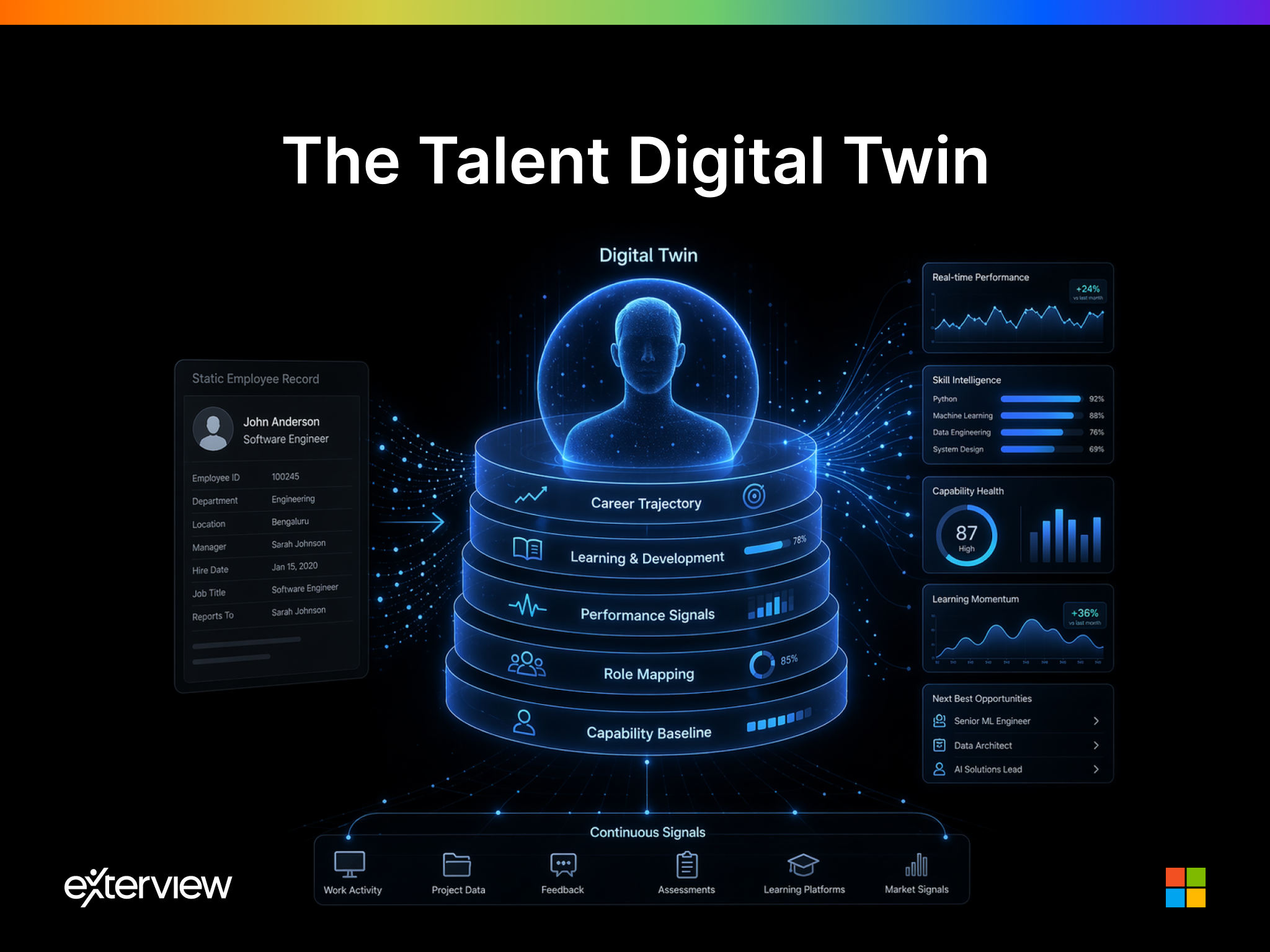
The Talent Digital Twin: From Static Employee Records to Living Capability Intelligence
In manufacturing, the digital twin concept has become foundational to operations management. A physical asset, a turbine, a production line, a vehicle is mirrored by a continuously updated digital model that reflects its actual operational state. Engineers query the digital twin to understand current performance, predict failure points, and optimize maintenance schedules. They do not rely on the asset's original specification sheet from three years ago. They rely on real-time data.
This concept is about to transform how enterprises manage their most complex and most valuable asset: their people.
The Problem with How Organizations Model Employees
The way most organizations represent their employees in enterprise systems would be unacceptable if it were applied to any other major asset class.
Imagine managing a data center where your monitoring system only recorded the original hardware specification at installation time. No current performance metrics. No utilization data. No failure history. No upgrade records. Just the purchase order from the day the servers arrived.
This is precisely how most HRIS systems model workforce capability.
An employee record typically contains:
- Name, job title, and grade at time of hire
- Department and reporting line
- Annual performance review rating (a 1-5 scale with no consistent definition)
- Training completion records from the LMS
- Compensation history
What it does not contain:
- A validated, structured assessment of current skill proficiency across relevant competency dimensions
- A record of how capability has evolved since the date of hire
- A comparison of current capability against the requirements of the employee's current role and their next likely career move
- A prediction of performance risk based on the gap between role requirements and demonstrated capability
In short, the employee record tells you what the person was expected to do when they were hired. It says almost nothing about what they can actually do today.
Introducing the Talent Digital Twin
A Talent Digital Twin is a continuously updated, multi-dimensional capability profile for each employee in the organization. It is not a static HR record. It is a living intelligence layer that reflects the employee's actual capability state — validated by structured assessment data, performance signals, learning records, and project outcomes updated continuously as new data becomes available.
The Talent Digital Twin model includes five data layers:
Layer 1: Validated Capability Baseline
The capability data captured during the hiring process from AI screening assessments, technical evaluations, and structured behavioral interviews becomes the foundation of the digital twin. This is not the capability the candidate claimed. It is the capability that was observed and scored through structured evaluation.
Layer 2: Role-Requirement Mapping
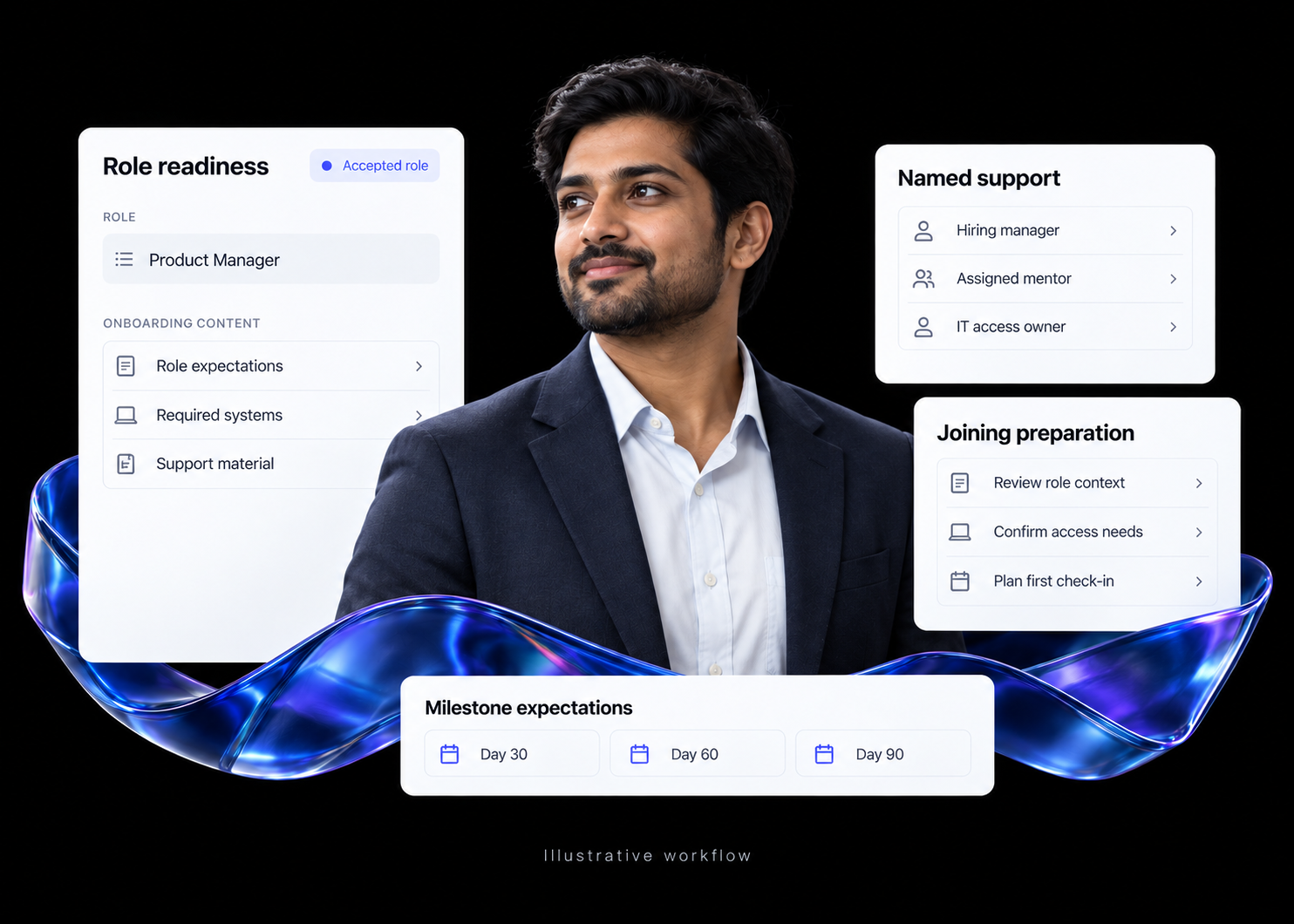
The digital twin continuously maps the employee's validated capability profile against the structured requirements of their current role. This produces a real-time view of capability fit identifying where the employee is operating above role requirement (a signal for growth opportunity or promotion readiness) and where gaps exist (a signal for development prioritization).
Layer 3: Performance Signal Integration
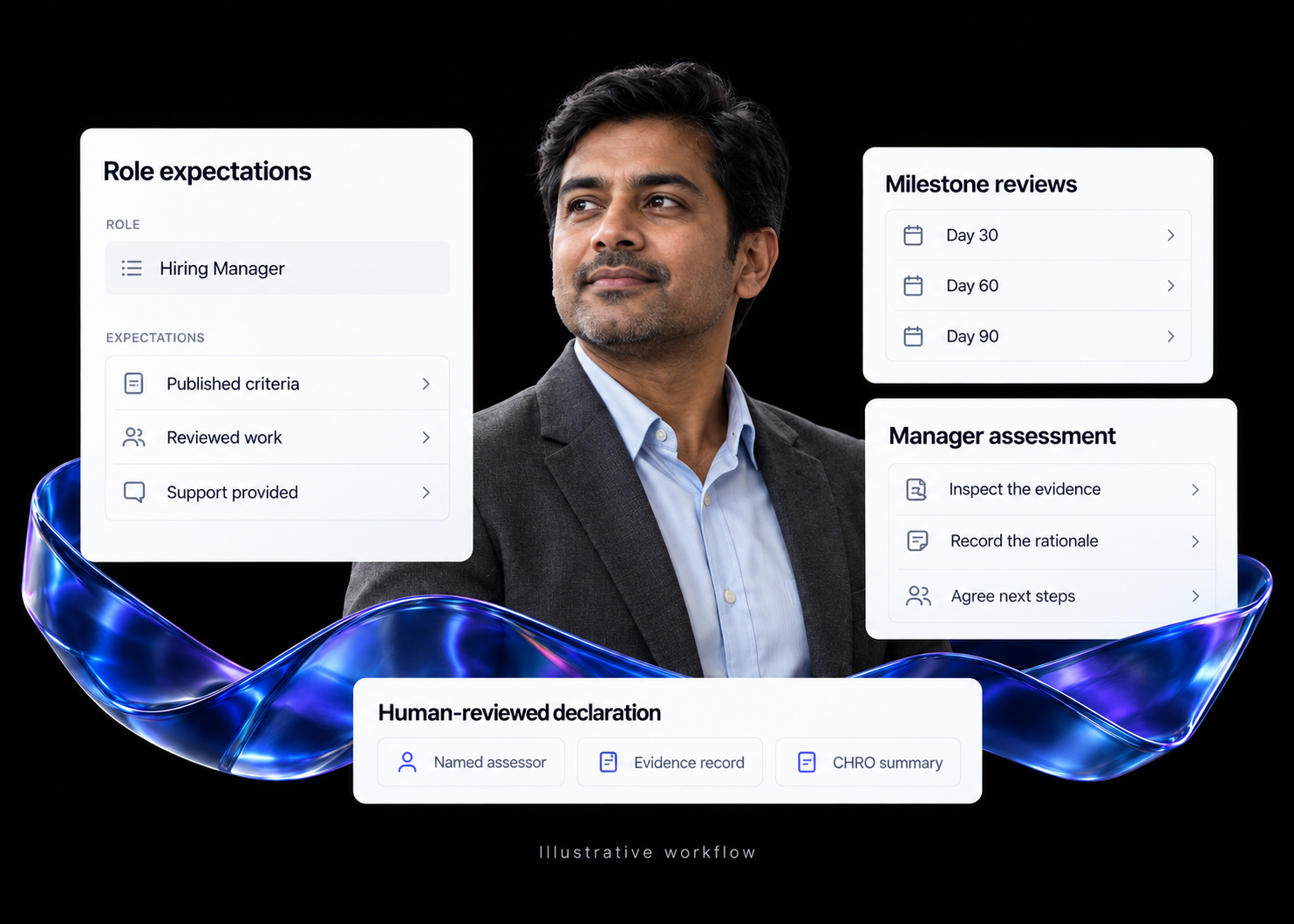
Ongoing performance data from structured 30-60-90 day assessments, manager evaluations, peer feedback, and project outcome data is integrated into the digital twin, updating the capability profile as performance evidence accumulates.
Layer 4: Learning and Development Tracking
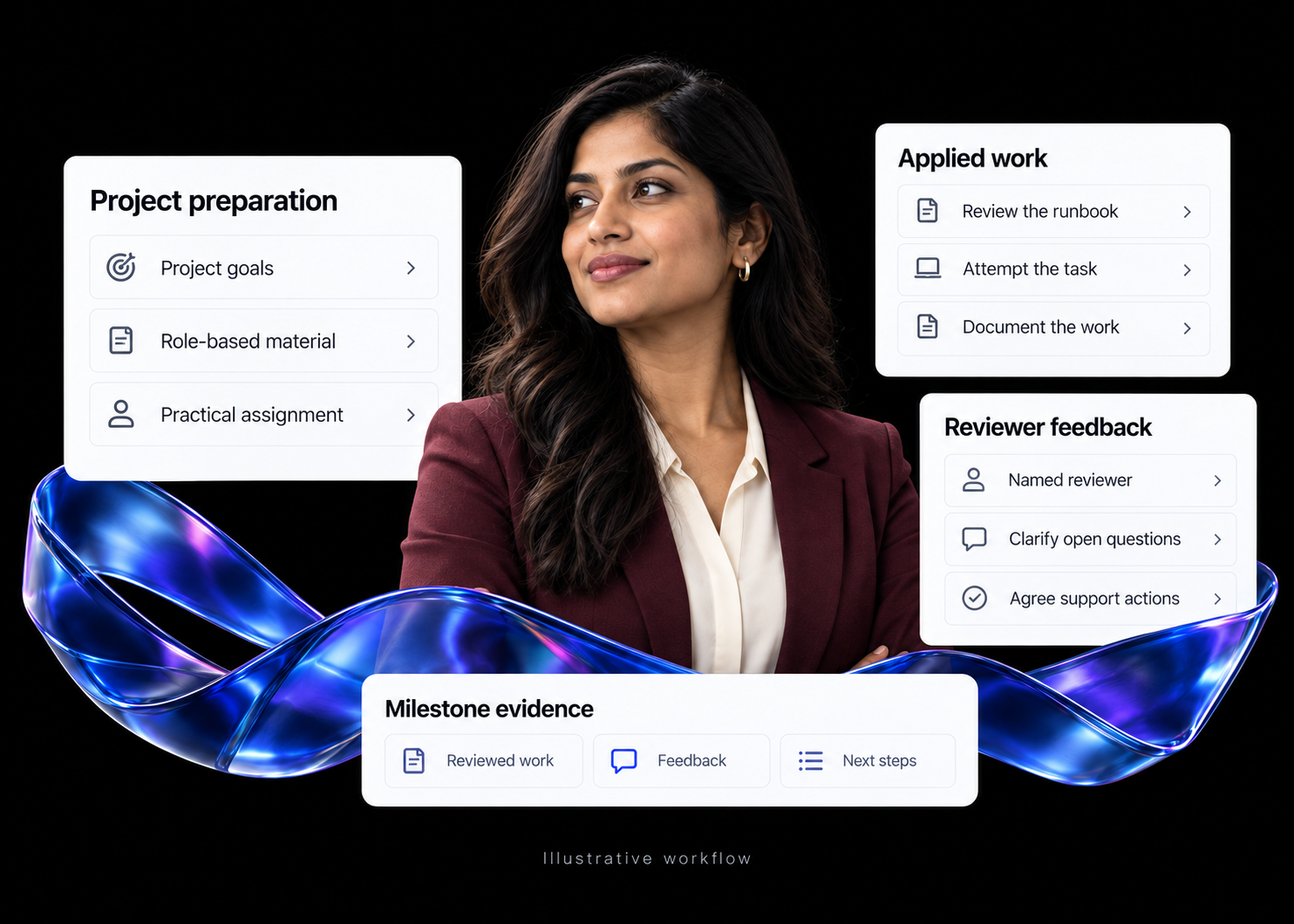
When an employee completes a certification, a training program, or a stretch assignment, the capability update associated with that development activity is reflected in the digital twin. Not as a course completion checkbox. But as a validated capability update, confirmed by assessment if the skill gain is significant enough to affect role performance.
Layer 5: Career Trajectory Modeling
The digital twin can model the employee's capability profile against the requirements of their likely next role identifying the development investments that would most efficiently close the gap between current capability and career goal. This transforms career development from a conversation about aspiration into a structured analysis of capability distance.
What the Talent Digital Twin Enables
For the Employee
Employees gain a clear, structured view of their own capability profile where they are strong, where gaps exist, and what development investments are most directly connected to their career progression. This replaces the vague annual review conversation with a continuous, data-driven development dialogue.
For the Manager
Managers gain visibility into the actual capability profile of their team not the job titles, but the skills. They can see capability gaps before they become performance problems. They can identify team members whose skills exceed their current role before those employees start looking for external opportunities. They can plan project staffing based on validated capability rather than organizational proximity.
For the Organization
At the aggregate level, the Talent Digital Twin enables the workforce skill graph described in our prior piece on workforce capability intelligence. When every employee has a structured, continuously updated capability profile, the organization can query that aggregate data to answer strategic workforce questions that are currently unanswerable.
The Connection to Hiring Intelligence
The Talent Digital Twin does not exist in isolation. It is the downstream manifestation of the hiring intelligence process that created the original capability baseline.
This is a critical architectural point: the quality of the digital twin depends entirely on the quality of the hiring evaluation that created it. An evaluation process that generates unstructured, subjective, poorly calibrated hiring data will produce a digital twin built on noise. An evaluation process that generates structured, validated, role-specific capability signals will produce a digital twin that is genuinely useful.
This is why the Exterview platform integrates hiring intelligence and workforce intelligence into a single capability architecture. Because the data model that governs evaluation at the point of hire must be consistent with the data model that governs capability tracking throughout the employee lifecycle.
The Future of Workforce Management Is Real-Time
The organizations that will make the best workforce decisions in the next decade are not the ones with the most employees or the largest HR budgets. They are the ones that can see their workforce capability with clarity and act on that visibility with speed.
The Talent Digital Twin is the mechanism that makes that visibility possible.
Your workforce is changing every day. Your understanding of it should be too.
Exterview is building the infrastructure for workforce intelligence that begins at hire and never stops.
Manish Surapaneni