
Screening
Capture interest, availability and joining expectations through a structured phone conversation. Give recruiters the information they need to decide the next step.
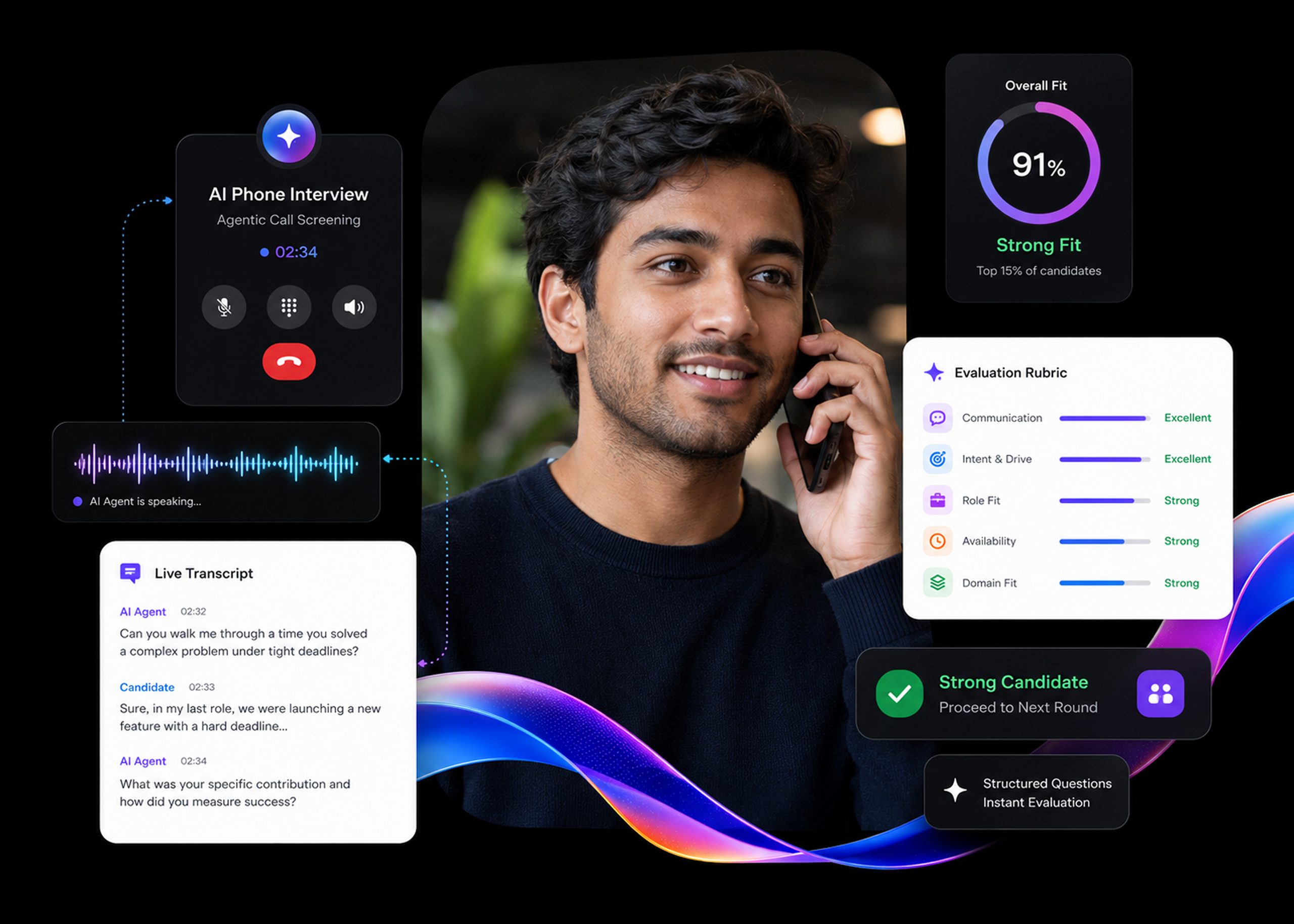
A relevant profile does not tell you whether someone is interested, available or aligned with the role’s practical requirements. Phone screening brings those questions into one structured conversation.
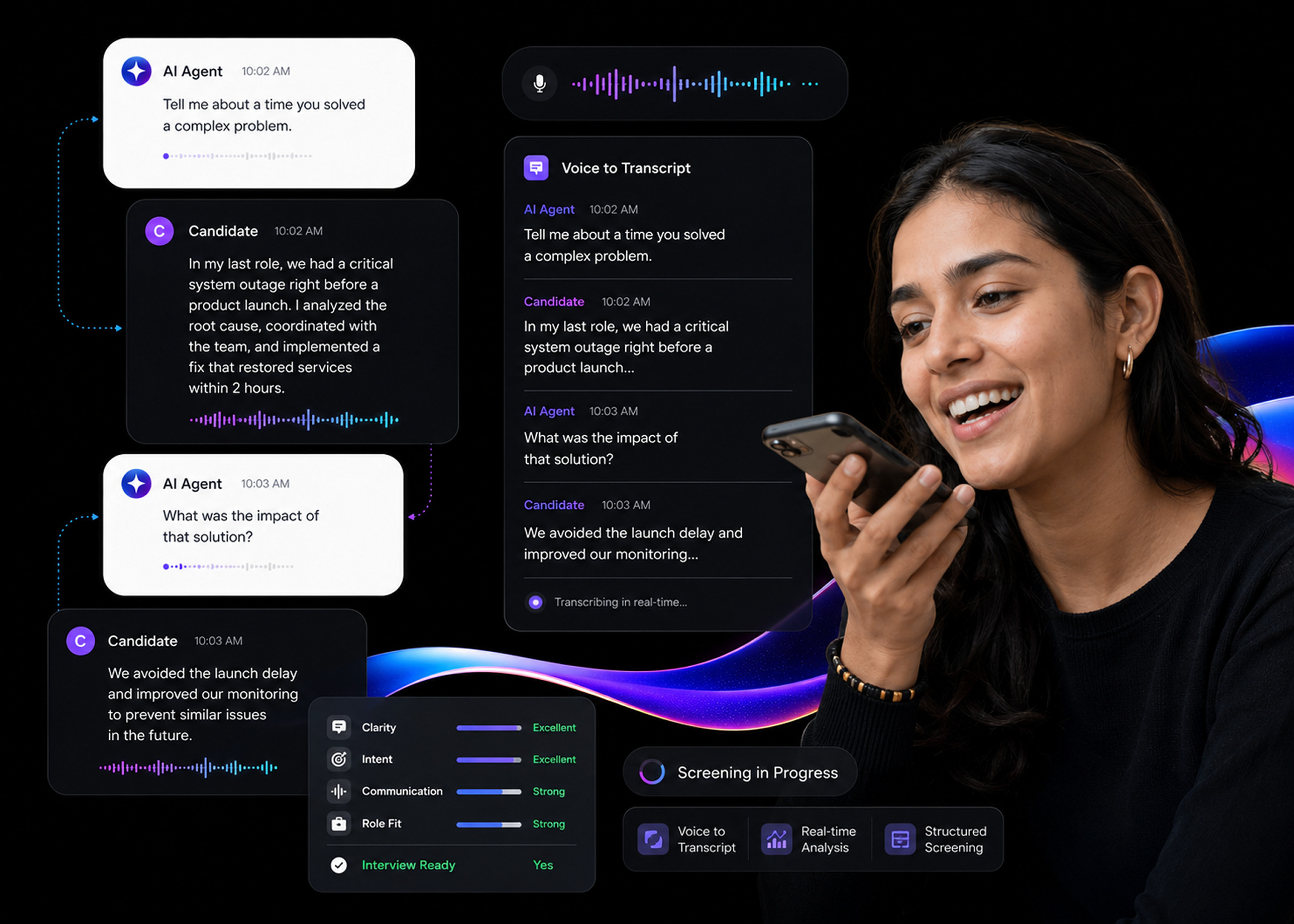
Give candidates role context before screening questions.

Capture whether the candidate wants to explore the role and why.

Record the candidate’s stated notice period and potential joining timeline.

Discuss compensation expectations and relevant working arrangements.

Ask configured questions tied to the role’s initial requirements.

Surface unanswered questions and exceptions for recruiter review.

.png)
Review the information captured, the evidence behind findings and the questions that still need a responsible person's attention.
The candidate’s stated interest and readiness to continue.
Availability and practical expectations captured during the conversation.
Answers to the configured initial questions.
Open questions and relevant context for the recruiter’s decision.
Phone focuses on initial interest, availability and practical readiness. Voice is used for a deeper, role-based interview.
An initial screen may identify topics to explore, but a technical conclusion requires relevant demonstrated evidence.
The uncertainty should be carried into the review record so a recruiter can clarify it.
No. It supports the configured screening process; hiring accountability remains with your team.
