
Evaluation
Ask role-specific questions, explore responses with follow-ups, and organize interview evidence against your evaluation criteria. Give hiring teams a record they can review.
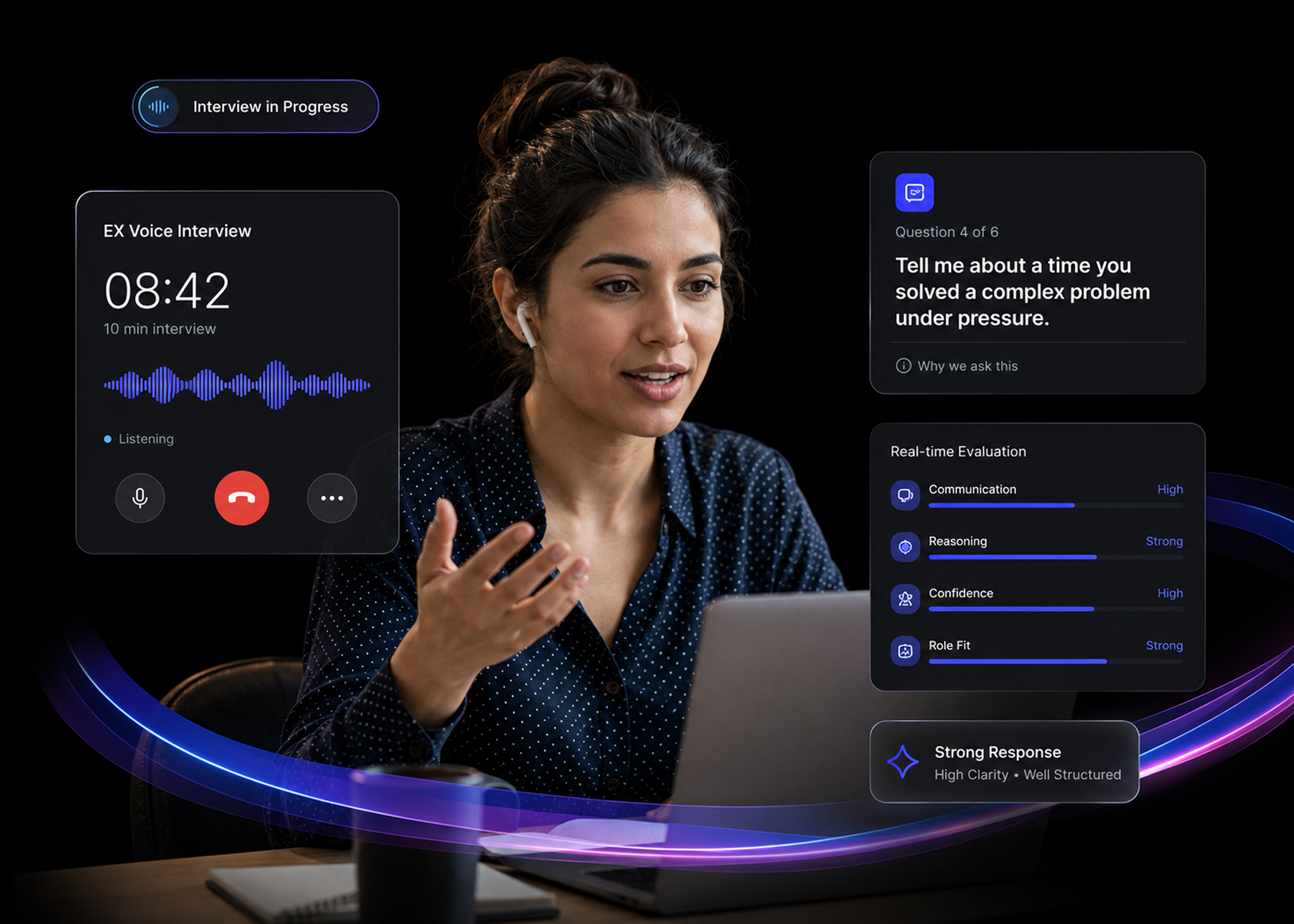
An interview is useful when the questions, responses and evaluation criteria remain connected. Voice interviews help your team examine what the candidate demonstrates rather than relying on an overall impression.
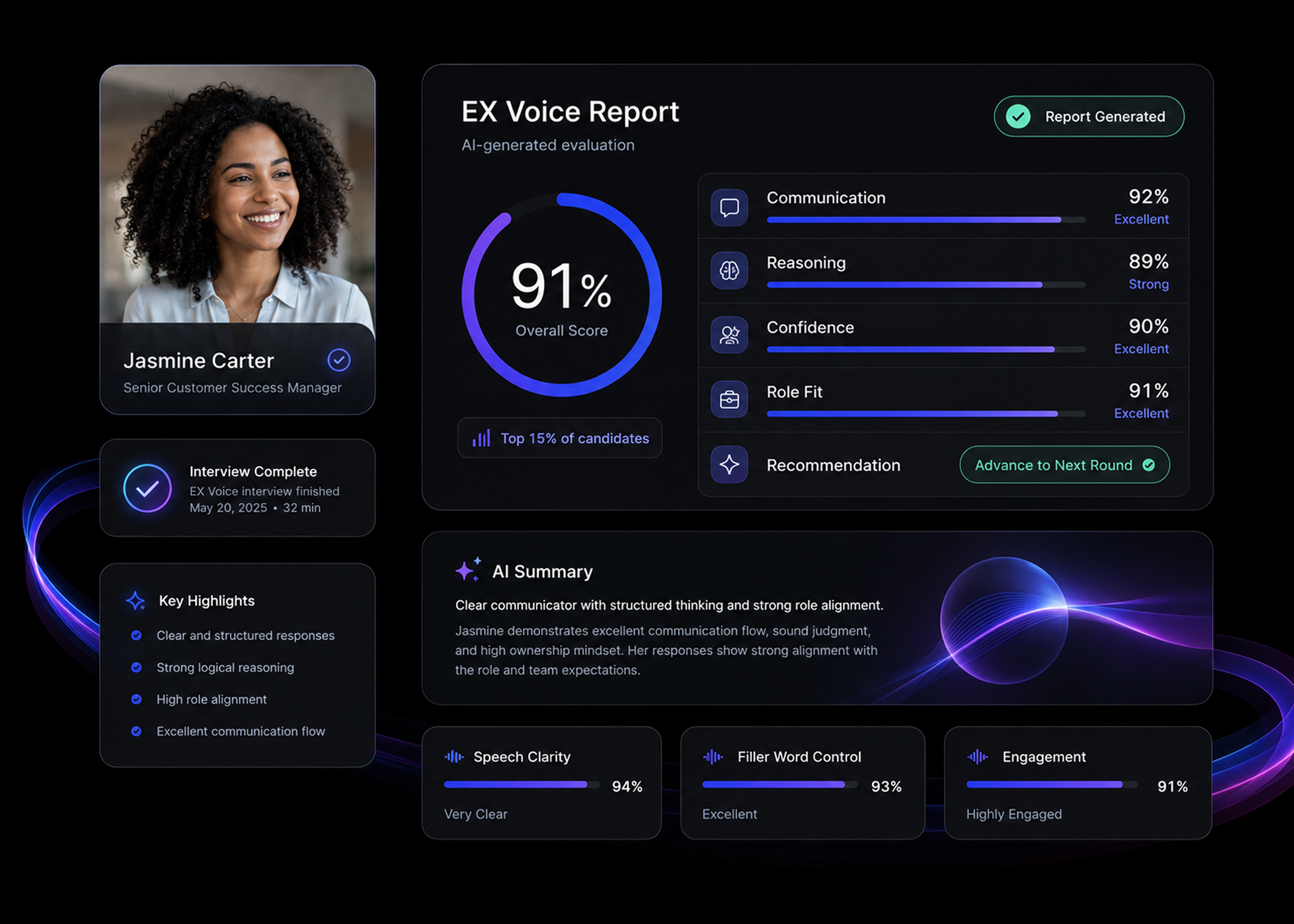
Start with the competencies and questions defined for the role.

Explore the candidate’s explanation where further detail is needed.

Capture the substance of the conversation for later review.

Relate observed responses to the criteria established for the interview.

Keep the supporting interview record available alongside the evaluation.

Surface strengths, gaps and unanswered questions for the hiring team.

.png)
Review the information captured, the evidence behind findings and the questions that still need a responsible person's attention.
The candidate’s responses and the context in which they were given.
Evaluation organized by the competencies being assessed.
Supporting responses and areas requiring further verification.
A structured basis for the next interview or decision review.
It supports evaluation of responses against the role-specific criteria configured for the interview.
Competence should be supported by job-relevant responses and demonstrated work. Tone, accent or perceived confidence should not substitute for that evidence.
Reviewers need the supporting interview record and the criteria used for each finding so they can examine the basis of the evaluation.
Both support structured interviews. Voice uses an audio conversation; Avatar provides an interviewer-led video experience.
