
Decision
Compare candidates by role, review the evidence behind recommendations, and identify areas needing further validation.
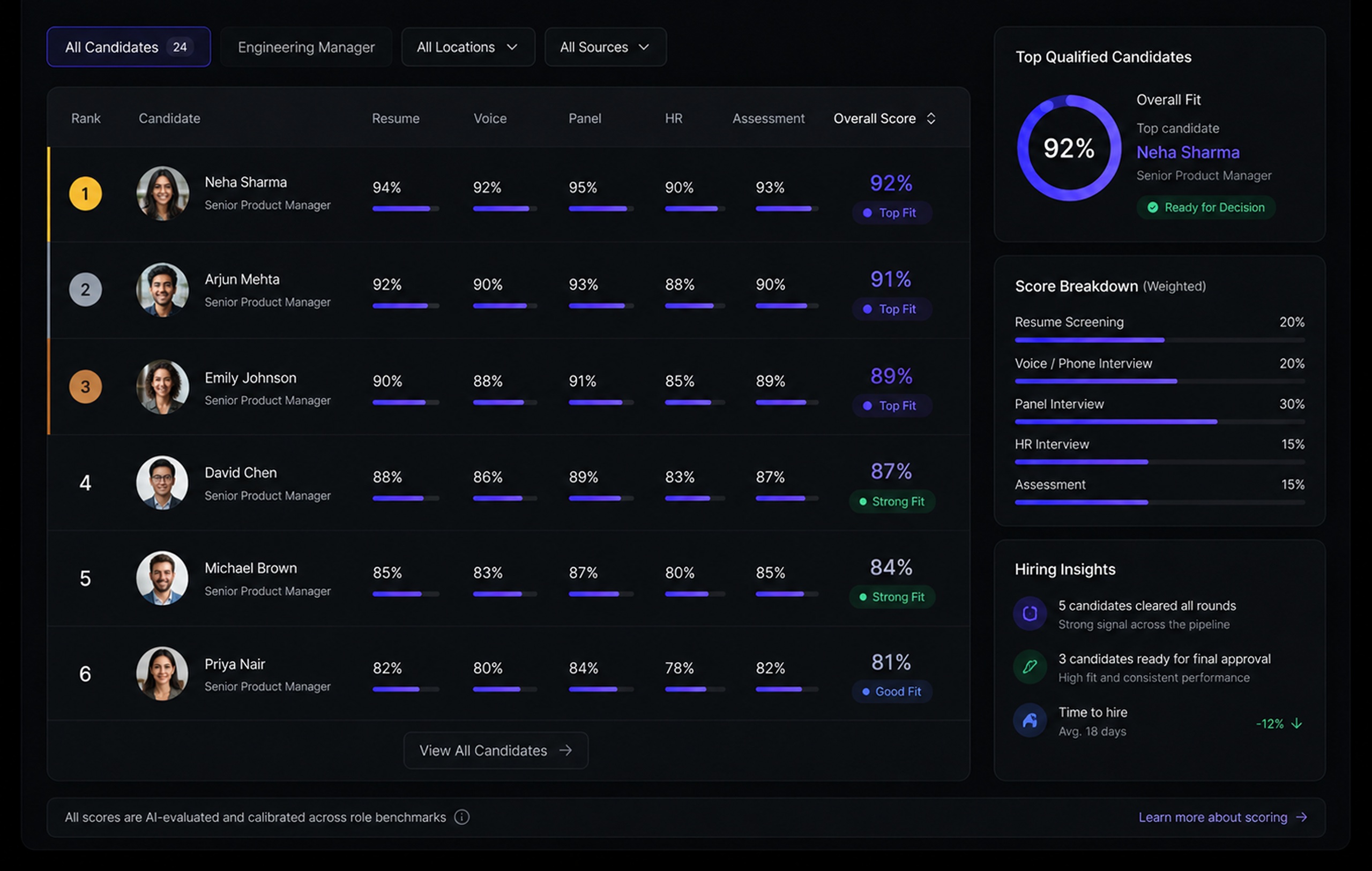
Candidates may have different amounts of evidence at different stages. Reviewers need to understand the criteria, supporting findings and gaps behind a comparison before making a decision.
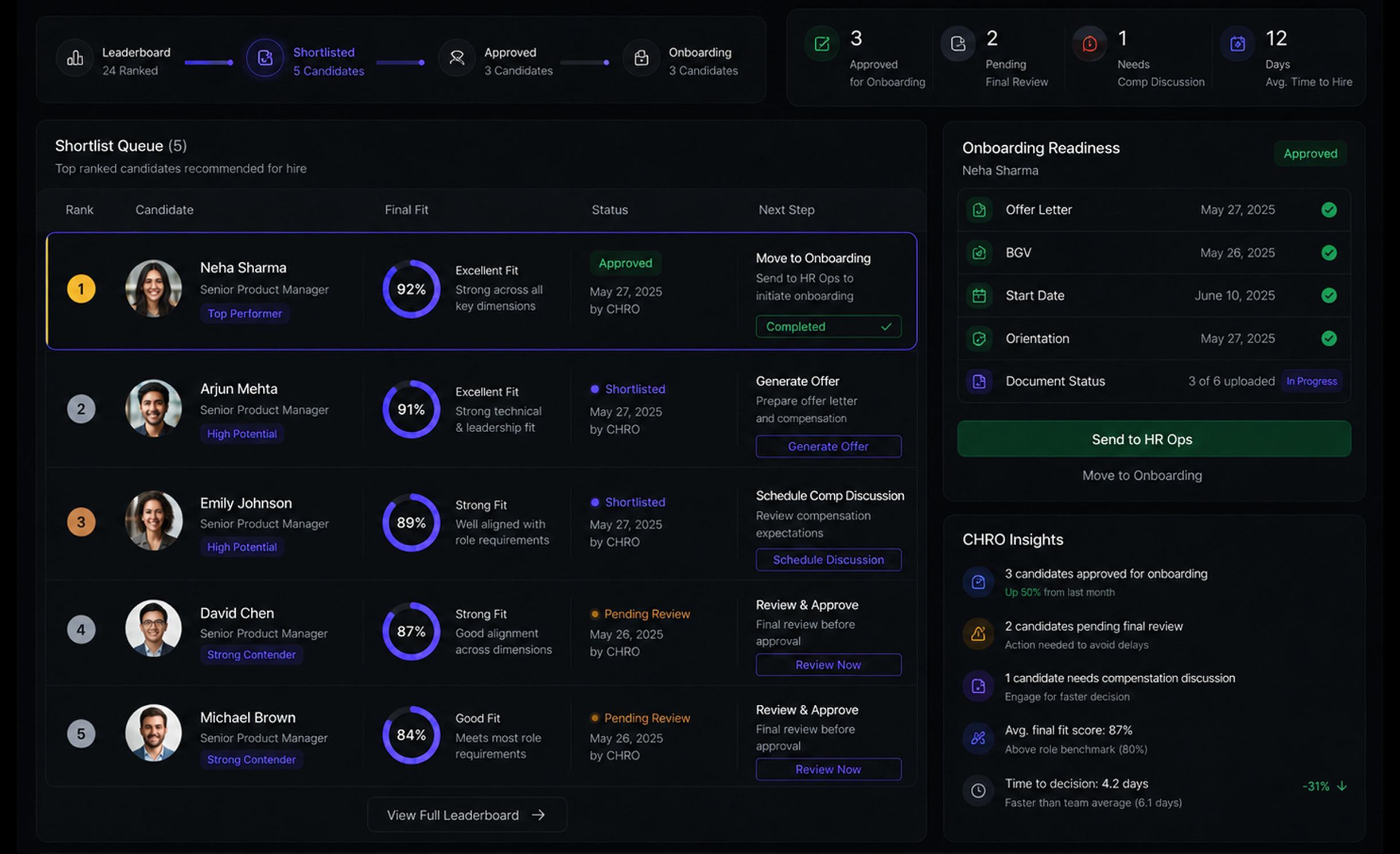
Use the defined role requirements as the basis for review.

Combine findings from completed screening and evaluation stages.

Keep the underlying evidence available for inspection.

Make incomplete evaluation visible instead of implying unsupported certainty.

Help the team identify candidates and questions that deserve attention.

Support a named person’s review of recommendations and exceptions.

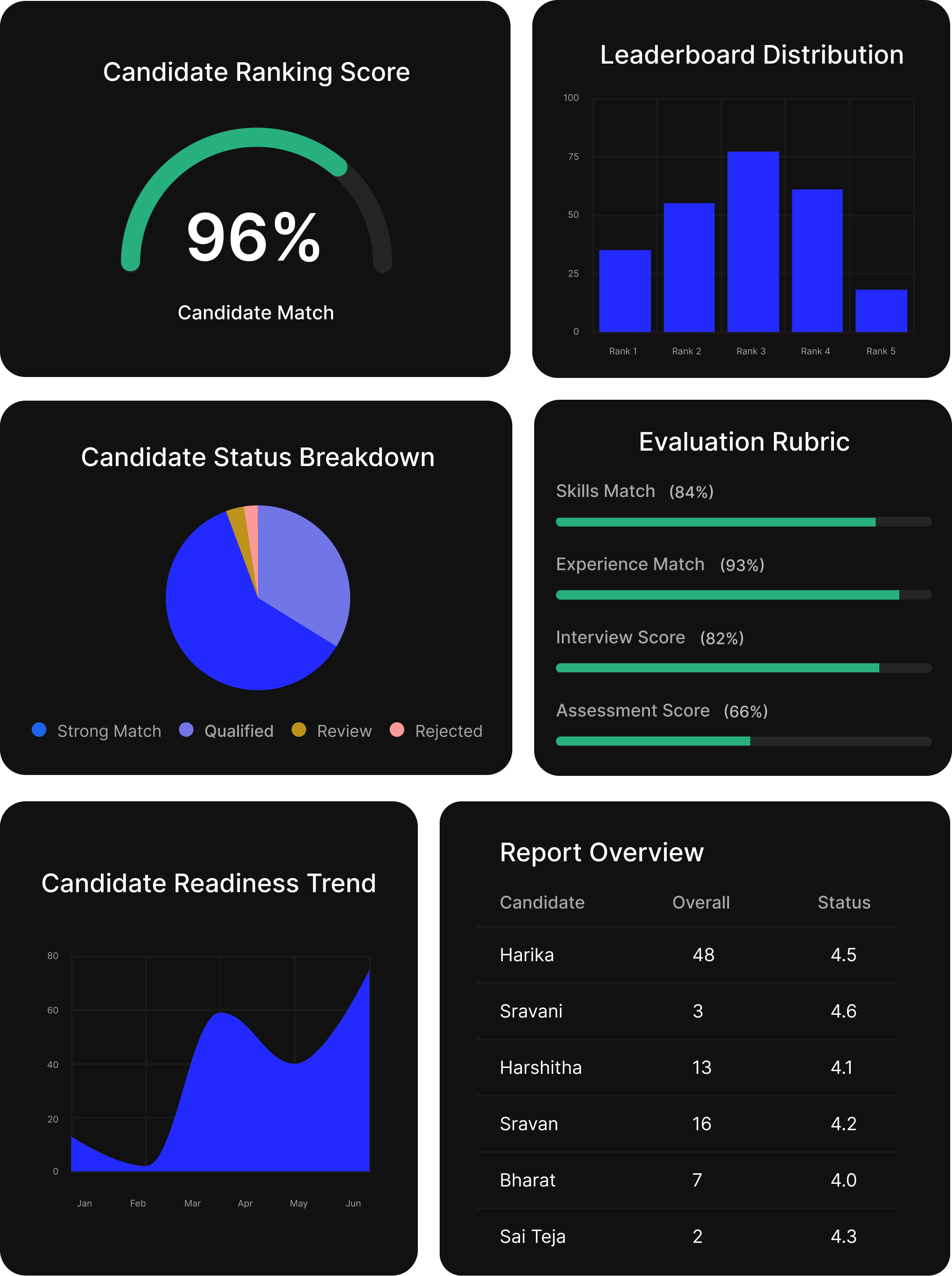
Review the information captured, the evidence behind findings and the questions that still need a responsible person's attention.
Candidates considered against the role criteria.
The evaluations available for each candidate.
Supported findings and areas that remain unresolved.
A clear basis for the responsible person’s decision.
No. Ranking supports review; the named decision owner remains accountable for the hiring decision.
No. Capability findings depend on the underlying demonstrated evidence. Ranking organizes the available findings for comparison.
Missing evidence should remain visible so candidates are not presented as equally assessed when they are not.
Human review is central to the process. The decision record should preserve the reviewer's reasoning and relevant evidence.
