How to run a 30, 60 and 90-day role-fit review
Review role expectations, demonstrated work and support needs at Day 30, 60 and 90.

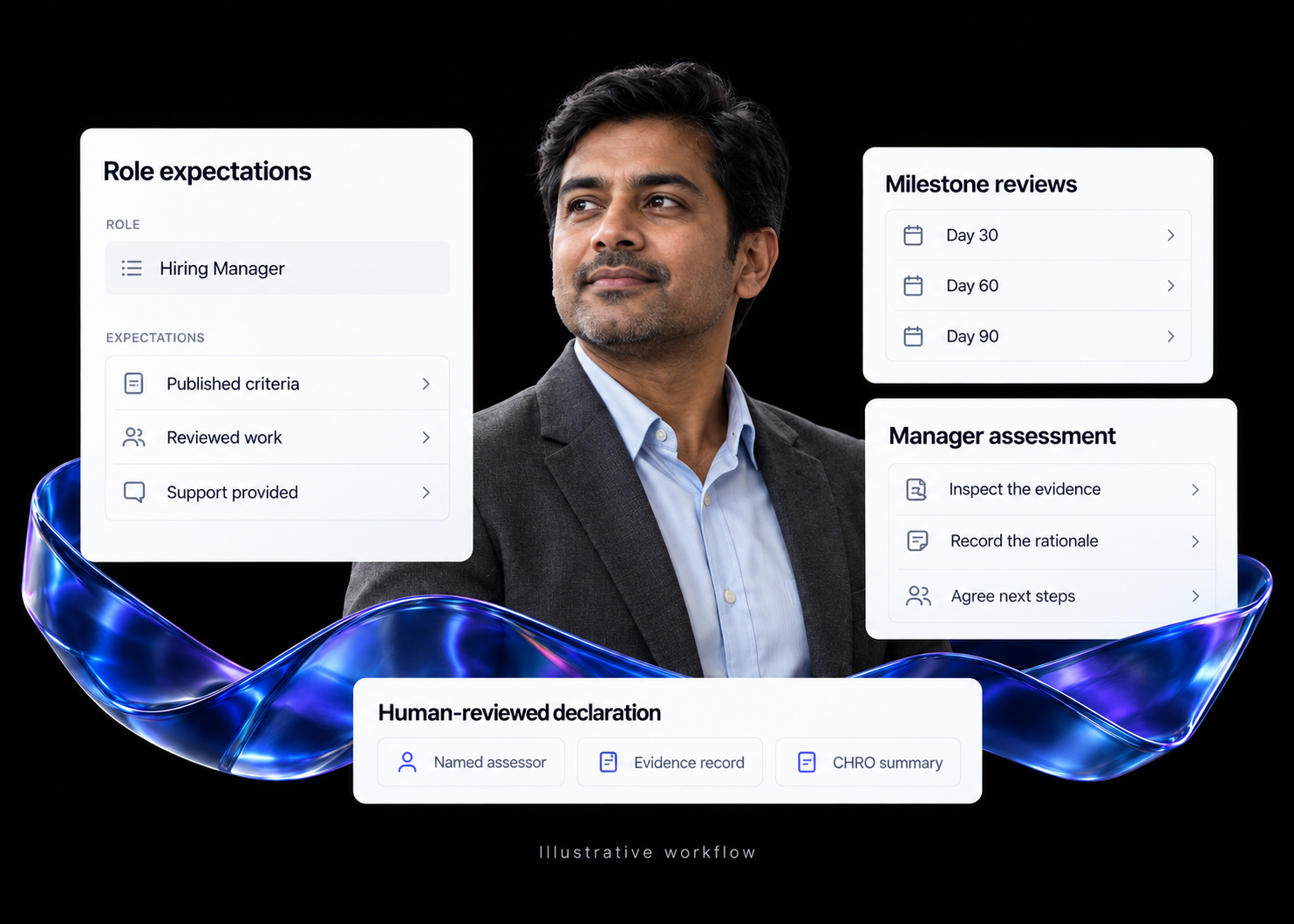
A role-fit review asks whether a person is demonstrating the work expected for their role, under the conditions and with the support provided. In the proposed Exterview operating model, Day 30, Day 60 and Day 90 are review checkpoints. They are not automatic pass/fail deadlines or a universal employment standard.
Publish the expectations first
Before the review period begins, agree the responsibilities, expected work, review criteria and named assessor with the joiner. Keep a dated record. If the role changes, document the change and explain how it affects the next review rather than silently assessing the person against a new standard.
OPM's performance management guidance connects advance expectations with monitoring and feedback. Our three-checkpoint structure applies those general principles to a proposed post-hire workflow; OPM does not prescribe this particular schedule. OPM performance management cycle.
Day 30: establish readiness and early evidence
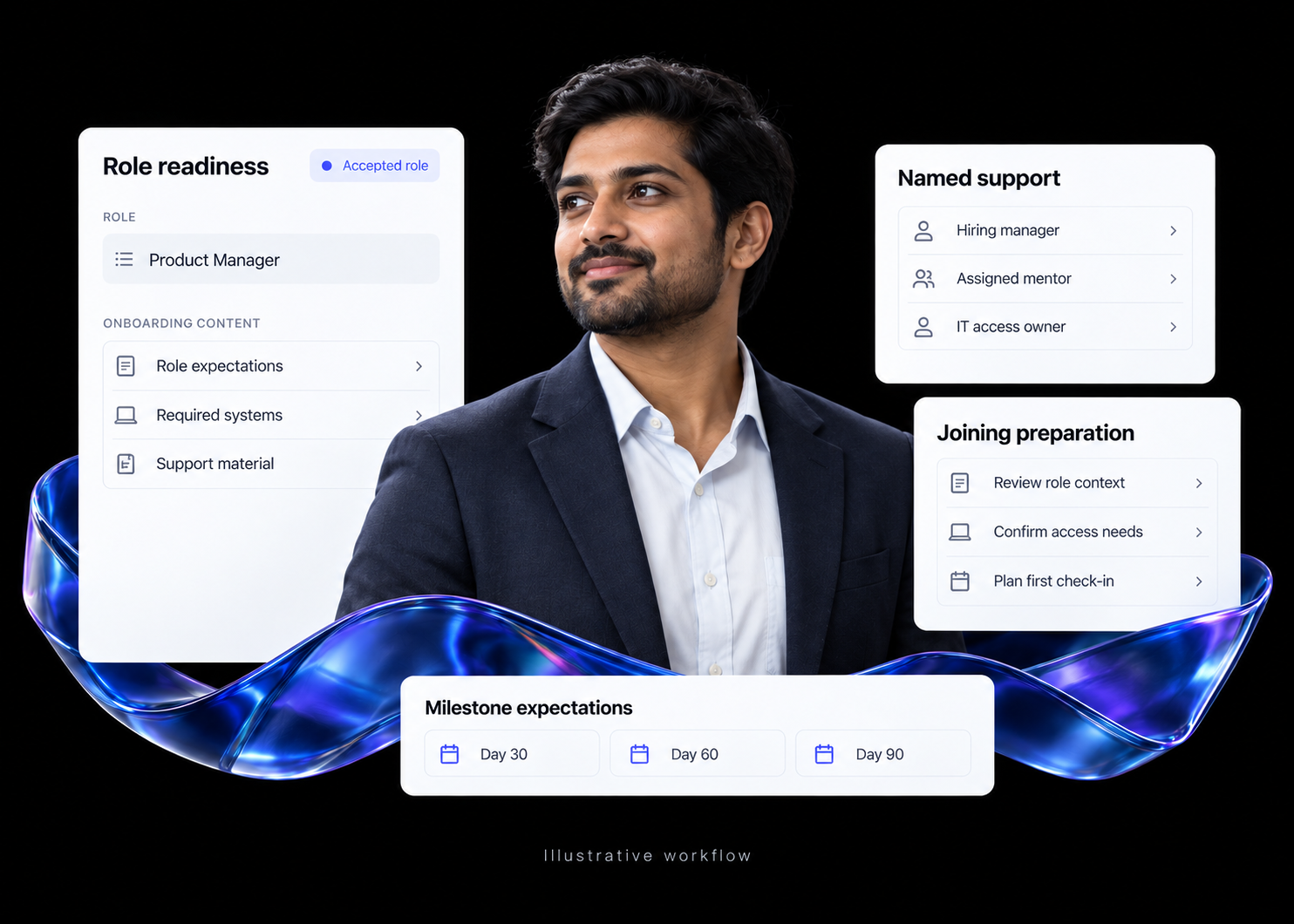
Review access, role understanding, initial work and immediate blockers. Ask which observations come from actual work and which are still assumptions. Record support needs and assign an owner. Do not interpret missing access or an unavailable reviewer as evidence that the person lacks capability.
Day 60: review applied work and feedback
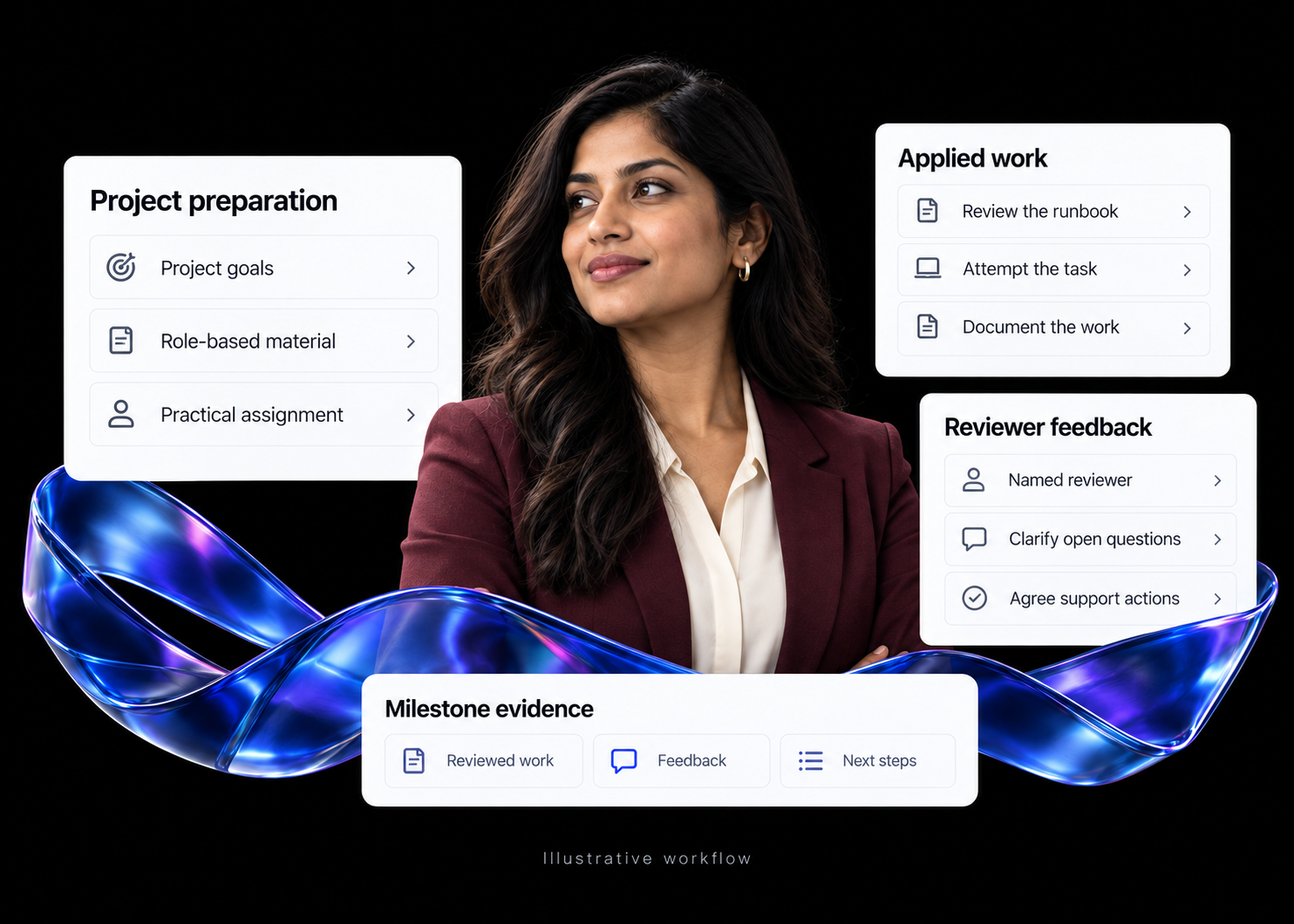
Compare reviewed artifacts with the agreed criteria. Look at how the person has responded to feedback and which questions remain. A useful review identifies specific work, the assessor's observation and the next action. General impressions can prompt questions, but should not replace inspectable evidence.
Day 90: record a human-owned conclusion
Bring the earlier records together. The named assessor should state the conclusion, evidence, limitations and agreed support or adjustment. Keep the conclusion distinct from any employment action, which remains the employer's responsibility under its own process.
A concise review record contains the expected outcome, evidence considered, reviewer, review date, observations, unresolved questions, joiner response and next action. Give the person a way to correct factual errors and add relevant context.
Illustrative example: a changed project brief
A fictional analyst joins to prepare weekly customer reports. Midway through the period, the team changes the reporting system and delays access to the replacement. The manager records the change, revises the practical assignment and explains which expectations can still be reviewed. The conclusion separates demonstrated work from evidence that could not yet be gathered. No success rate or customer outcome is implied by this example.
What should the CHRO receive?
Provide the manager's conclusion, supporting milestone evidence, unresolved limitations and material support actions. Describe this as an early view of post-hire contribution. It is not a lifetime measure of quality of hire, and it should not automatically change future hiring criteria without a separate governed review.
Explore the Role Fit Agent, the preceding Project Training Agent and the onboarding handoff guide. The Offer Agent anchors the original accepted role. In the Workforce Ops design, post-offer responsibilities sit within Gradientflo's Rolefit module, connected with Smaya orchestration; confirm availability for the intended deployment.
Frequently asked questions
Is Day 90 the final measure of quality of hire?
No. It is an early checkpoint; later contribution needs later review.
Can an agent decide an employment outcome?
In this proposed model, a named human assessor remains accountable. The record supports that person's review.
What if evidence is incomplete?
State what is missing, why it is missing and the next review action. Do not convert uncertainty into an unsupported conclusion.
Can the review be challenged?
The evidence and reasoning should be inspectable, with a process for correcting errors and considering relevant context.

Manish Surapaneni