Project training: connect learning to role-ready work
Connect project learning to practical assignments, named reviewers and evidence of applied work.

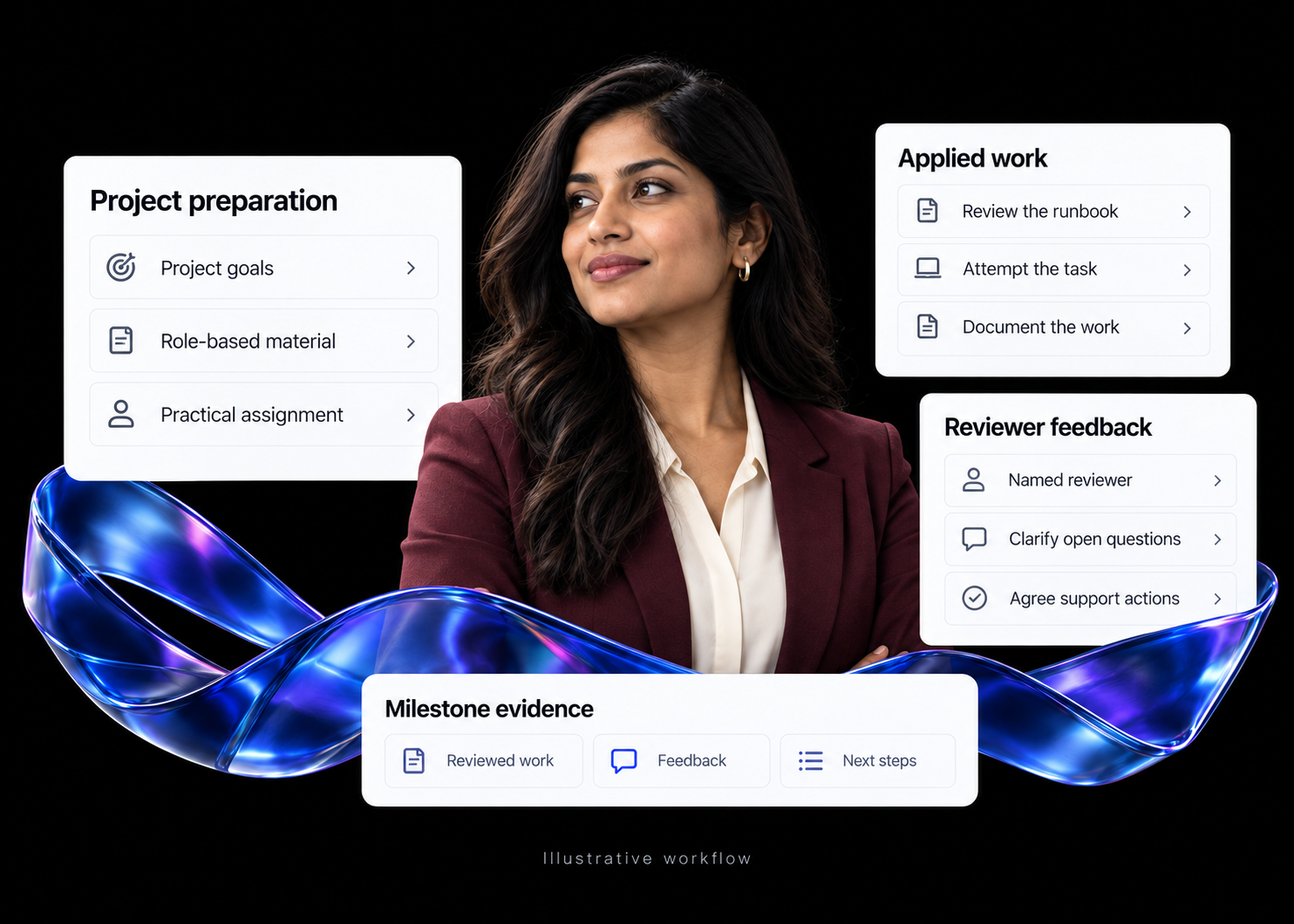
Project training connects what a joiner studies with what the role requires them to do. A useful plan identifies relevant material, a practical assignment, a named reviewer and an opportunity to improve after feedback. Course completion is a record of activity; reviewed work is a separate source of evidence.
Define the work before selecting the material
Begin with one role responsibility. Describe an observable output that would help a reviewer understand the joiner's current capability. Then choose the material and support needed to attempt it. This sequence keeps the training plan tied to the project rather than to an undifferentiated content library.
For example, an engineer's assignment might be to explain a service's failure path using its approved runbook and a sandbox exercise. Specify the permitted environment and reviewer before the exercise begins. Do not equate access to training with permission to make production changes.
Use a simple assignment record
For each assignment, record:
- The role responsibility it supports.
- The expected artifact or demonstration.
- The reference material and environment available.
- The criteria the reviewer will use.
- The named reviewer and review date.
- The feedback, support action and next attempt where needed.
The U.S. Office of Personnel Management describes development as including training and work assignments, alongside planning and ongoing feedback. That is useful general practice context; it does not establish a particular Exterview capability or a universal assessment schedule. OPM performance management cycle.
Review the artifact and the conditions
A reviewer should explain which criteria the work demonstrates and which questions remain. Record a concrete observation rather than a vague label such as “not ready.” If the person had incomplete access, outdated material or an unclear brief, record those conditions as well.
Keep the original attempt and subsequent feedback distinguishable. A later improvement should not erase the record of what changed. This makes the next check-in a discussion of work and support rather than an argument about recollection.
Illustrative example: reviewing an incident exercise
In a fictional project, a new engineer prepares a short incident-response note from a simulated service failure. The reviewer checks whether the note identifies the failure, cites the runbook and proposes an appropriate escalation. If escalation ownership is unclear in the material, the team repairs the runbook and schedules another attempt. This is an illustrative learning design, not a claim about training outcomes or a production incident.
Carry evidence into the next review
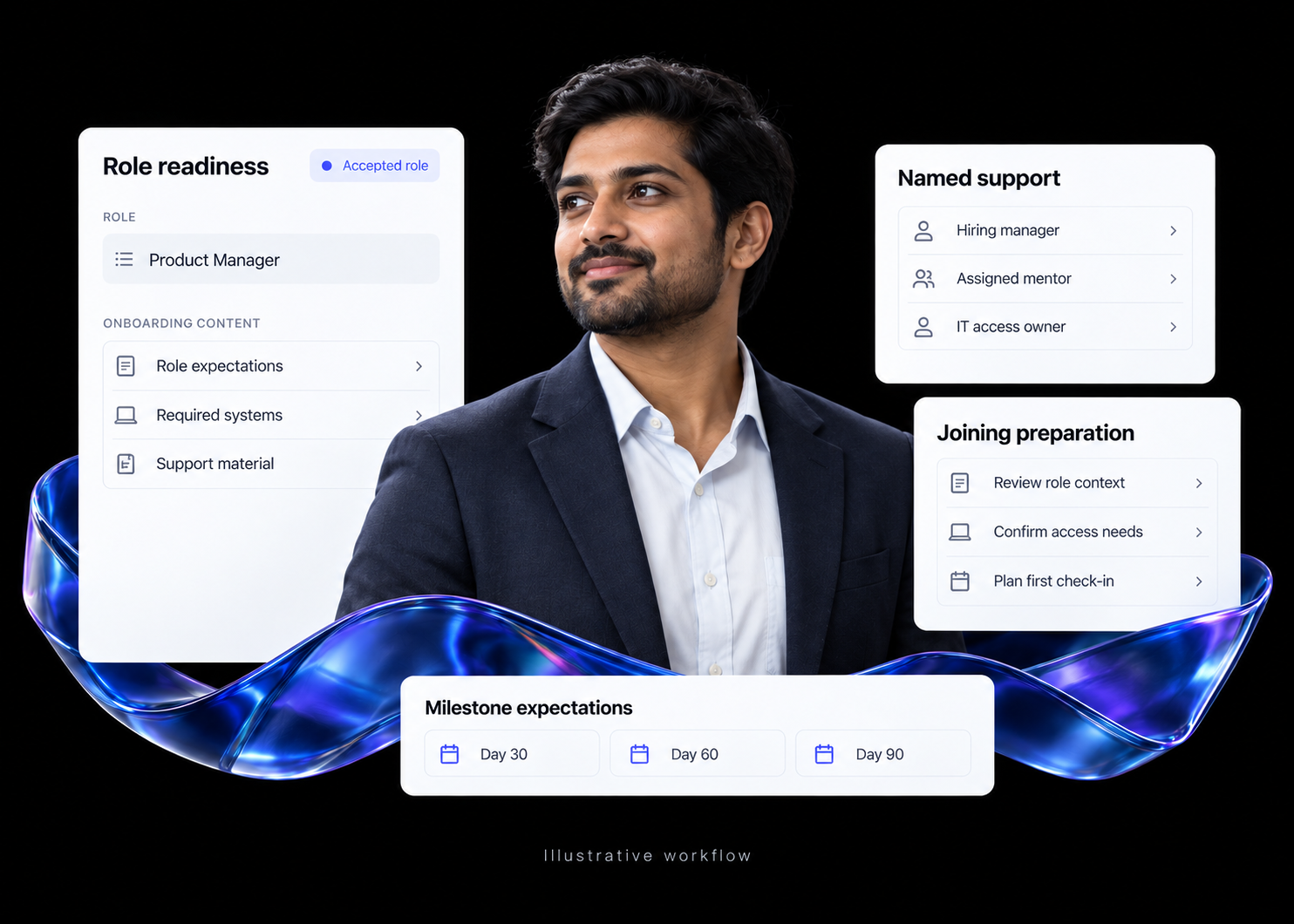
The Project Training Agent page describes how project preparation fits into the proposed assimilation workflow. Begin with readiness from the Onboarding Agent, then carry reviewed artifacts and agreed support actions into Role Fit. Deployment availability and configured integrations should be confirmed before promising automated execution.
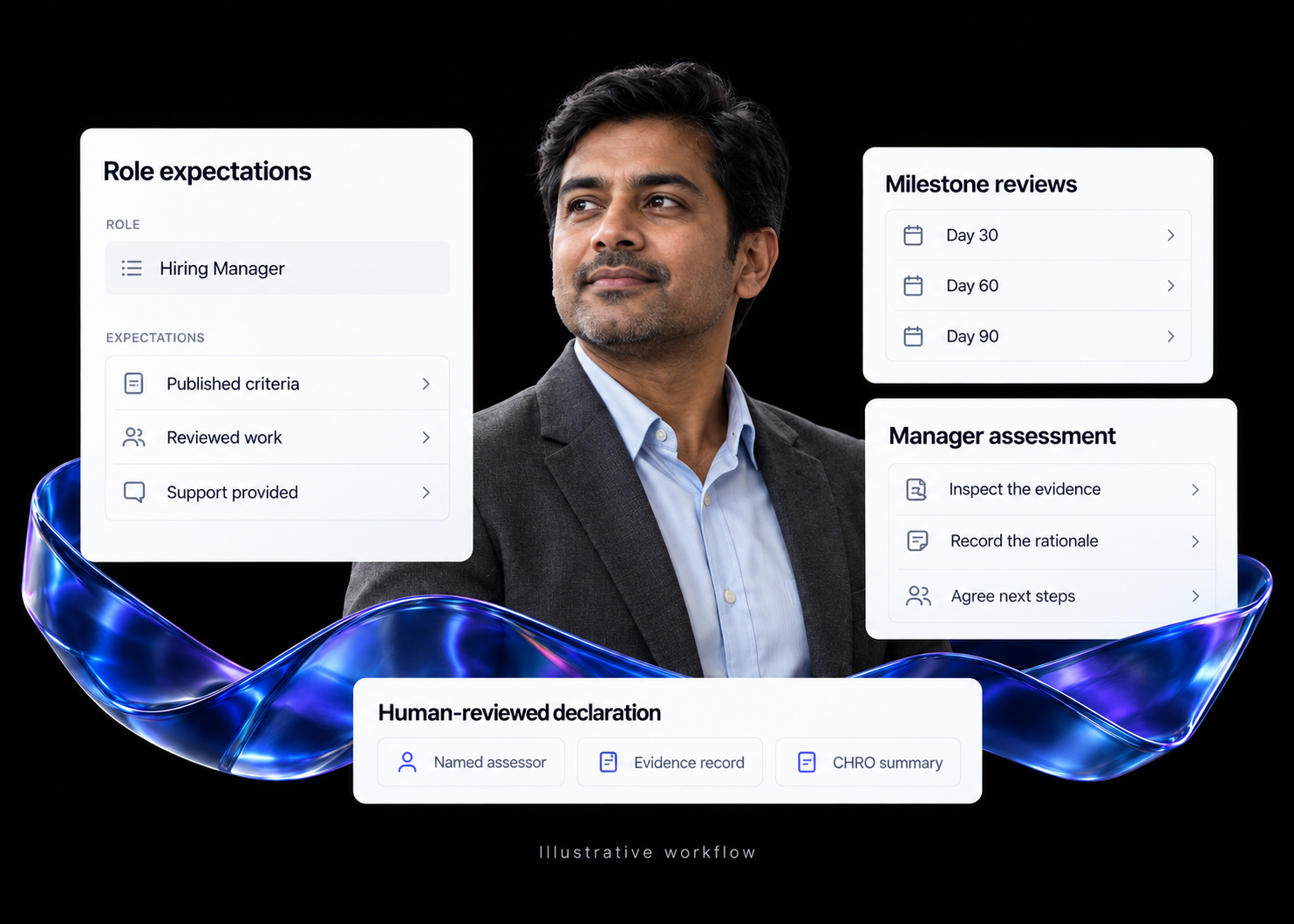
The 30-, 60- and 90-day review guide explains how to use that evidence without treating a course completion or a single assignment as a final employment judgment. Return to the Offer Agent when the team needs to reconcile the role expectations accepted during hiring.
Frequently asked questions
How is project training different from onboarding?
Onboarding establishes readiness and context. Project training focuses on applying knowledge to relevant work.
Does every role need the same assignments?
No. Use assignments that reflect the role, project and level of responsibility.
Who assesses the work?
A named human reviewer responsible for the relevant competency or project.
What happens when someone needs more support?
Record the specific gap, agree the support action and define a reasonable next review. Do not infer a final role-fit outcome from one incomplete attempt.

Manish Surapaneni