Role-based onboarding: what should pass from offer to manager?
Carry the accepted role into onboarding with clear expectations, access requirements and named owners.

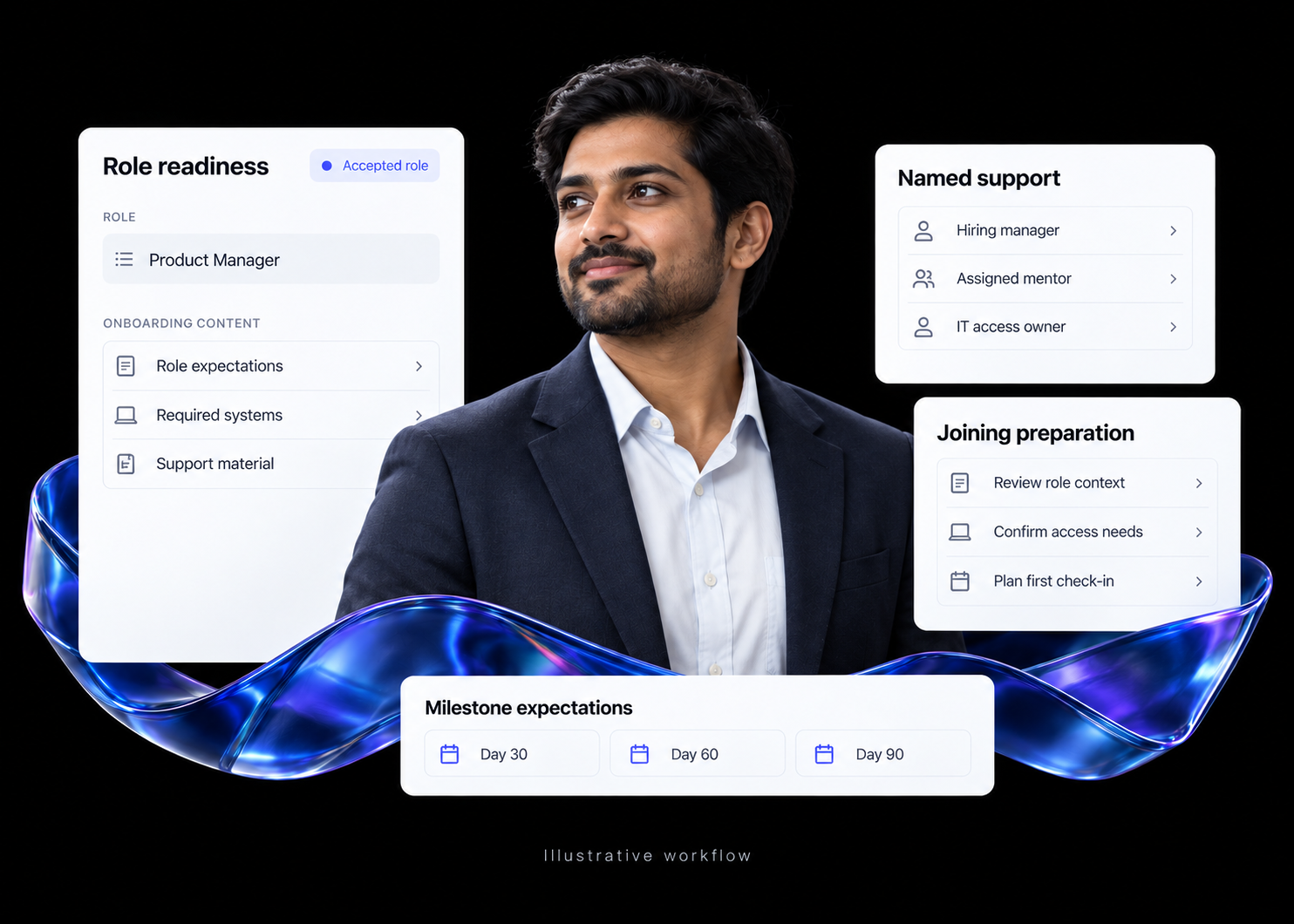
Role-based onboarding starts with the work a person has accepted. The handoff should carry the agreed responsibilities, joining information, readiness requirements and named manager into a practical starting plan. An accepted offer establishes agreement; the onboarding plan establishes what the person needs to begin.
Start the handoff before the first day
The recruiter and hiring manager should review one shared record before the person joins. Ask whether the role described during hiring still matches the work the manager expects. If scope, location or joining arrangements have changed, record the change and resolve it through the employer's process rather than leaving the joiner to discover it later.
This is consistent with CIPD's description of induction as helping a new recruit settle in with the knowledge and support needed for the role. The checklist below is our practical implementation proposal, not a CIPD-prescribed template. CIPD induction factsheet.
Carry five pieces of context forward
- Accepted role: the responsibilities, team and reporting relationship agreed during hiring.
- Joining arrangements: the confirmed start information and unresolved candidate questions.
- Readiness dependencies: equipment, access and material, each with an owner and expected availability.
- Support network: the manager, mentor and operational contacts the joiner can approach.
- Initial expectations: the first work outcomes to discuss, how they will be reviewed and when feedback will happen.
Keep administrative readiness separate from demonstrated capability. Access being granted means the person can begin using a system; it does not establish that they can perform the role independently.
Make ownership visible
For this operating model, the recruiter owns the completeness of the hiring handoff. The hiring manager owns role expectations and early work. IT and other support teams own their assigned readiness tasks. The joiner should be able to raise a blocker without guessing who is responsible.
At the first manager check-in, review what is ready, what is blocked and what the person understands about the role. Record changed expectations openly. A missed dependency should lead to an owner and next action, not disappear inside a generic completion percentage.
Illustrative example: a new product manager
Consider a fictional product manager joining a platform team. Their first assignment is to document a customer problem and propose how to validate it. Readiness includes access to the research repository, an introduction to the engineering lead and an agreed review date. If repository access is delayed, the manager records the dependency and adjusts the assignment. This example describes a workflow, not a customer result.
Connect onboarding with project preparation
The Onboarding Agent page describes the proposed role-readiness workflow. The Offer Agent provides the preceding offer context. In Exterview's Workforce Ops design, Smaya orchestration connects the hiring record with post-offer work in Gradientflo's Rolefit module; confirm enabled workflows for your deployment.
Once readiness is established, use the project training guide to connect learning material with a practical assignment and a named reviewer.
Frequently asked questions
Who owns successful onboarding?
The employer's named manager and supporting teams own delivery. Coordination software can organize the record and reminders; it does not remove that accountability.
Is a completed checklist enough?
It shows that listed tasks were completed. Review actual readiness and role understanding separately.
Should review expectations be shared in advance?
Yes. In this model, the joiner sees the expected work and review criteria before being assessed against them.

Manish Surapaneni