Hiring Fraud: Proxy Interviews, Deepfakes and Fixes
Learn how to spot and prevent remote hiring fraud, from proxy interviews and deepfakes to real-time assistance and fabricated credentials.


Hiring Fraud in Remote Interviews: Proxy Candidates, Deepfakes and How to Stop Them
A candidate aces three rounds of video interviews. On day one, a different person logs in.It sounds far-fetched, but TA leaders in technology, BFSI and global capability centersincreasingly report versions of this story. Remote interviewing made hiring faster andmore inclusive, and it also opened new doors for hiring fraud that most hiring stacks werenever designed to catch. In this article, you will learn the main types of remote hiringfraud, the warning signs to watch for and practical steps to protect your process.
TL;DR
Hiring fraud includes proxy interviews, real-time assistance, deepfakes andfabricated credentials. Gartner found 6% of candidates admit to interview fraud andpredicts 1 in 4 candidate profiles will be fake by 2028. Most hiring stacks never verify whois on the call. How exposed is your process? Run through our 10-point hiring fraudchecklist with your TA and security teams
In This Article
- What are the main types of hiring fraud?
- How can you spot a fake job candidate?
- How do you prevent hiring fraud?
- Frequently asked questions
- Conclusion
What Are the Main Types of Hiring Fraud?
The four main types of remote hiring fraud are proxy interviews, real-time assistance,deepfake video or voice, and fabricated credentials. All four exploit the same gap: mosthiring processes never verify that the person being interviewed is the person applying.
The problem is measurable. A 2025 Gartner survey of 3,000 job candidates found that 6%admitted to interview fraud, either posing as someone else or having someone else poseas them. Gartner also predicts that by 2028, one in four candidate profiles worldwide willbe fake.
Proxy Interviews: A proxy interview is when a more qualified person sits the interview in the candidate'splace, sometimes for every round. The real candidate appears only once the offer issigned.
Real-Time Assistance: Answers are fed to the candidate through a second screen, an earpiece or an AI toolrunning in the background. The candidate is real, but the skills on display are not theirs.
Deepfake Video and Voice: Still relatively uncommon, but cheaper and more convincing every year. Face-swappingand voice-cloning tools can make one person appear to be another on a live call.
Fabricated Credentials: AI-generated resumes, invented employers and inflated experience that pass keywordfilters easily. These often go undetected until background verification, if it happens at all.
How Can You Spot a Fake Job Candidate?
The most common signs of a fake job candidate include audio that does not match lip movements, long pauses before answers, repeated eye movement toward one side of the screen, reluctance to use video or complete identity checks, and significant differences in performance between interview rounds.
Look for signals such as:
- Audio and lip movements that do not quite match during video calls.
- Long pauses before answers, or eyes repeatedly moving to one side of the screen.
- Very different performance between rounds, especially between video interviewsand a live or on-the-job task.
- Reluctance to turn on video or to complete identity checks.
- Resume details that do not hold up under follow-up questions.
Why Traditional Hiring Stacks Miss These Signals
Most ATS platforms manage candidate records well but do not verify identity duringinterviews or flag suspicious behavior in real time. Each interviewer sees only their ownround, so inconsistencies across stages go unnoticed. As Gartner notes, candidate fraudcreates cybersecurity risk that can be far more serious than a bad hire. In regulatedindustries, a fraudulent hire with system access is a compliance incident.
Want to talk to our experts to find a fix? It only takes 20 mins. Book Now.
How Do You Prevent Hiring Fraud?
You prevent hiring fraud with layered controls: verify identity at key interview stages, use behavioral signals during interviews, check consistency across rounds, and build verification into the hiring workflow rather than leaving it until after the offer.
1. Verify Identity at Key Stages: Match the person on the call to their ID at the start of each significant interview stage, not only at onboarding. Identity verification should be part of the hiring process rather than a final administrative step.
2. Use Behavioral Signals During Interviews: AI tools can flag signs of proxy participation or outside assistance, such as voice changes, gaze patterns, unusual response timing, or other behavioral anomalies. Humans should review the flags rather than relying entirely on automated detection.
3. Check Consistency Across Rounds: Compare voice, appearance, and performance across stages. This helps identify situations where a proxy may switch in or out during the hiring process.
4. Test Understanding, Not Just Answers: Ask follow-up questions about the candidate's own answers or code, especially during technical assessments. A candidate who genuinely understands their experience should be able to explain decisions, approaches, and tradeoffs in their own words.
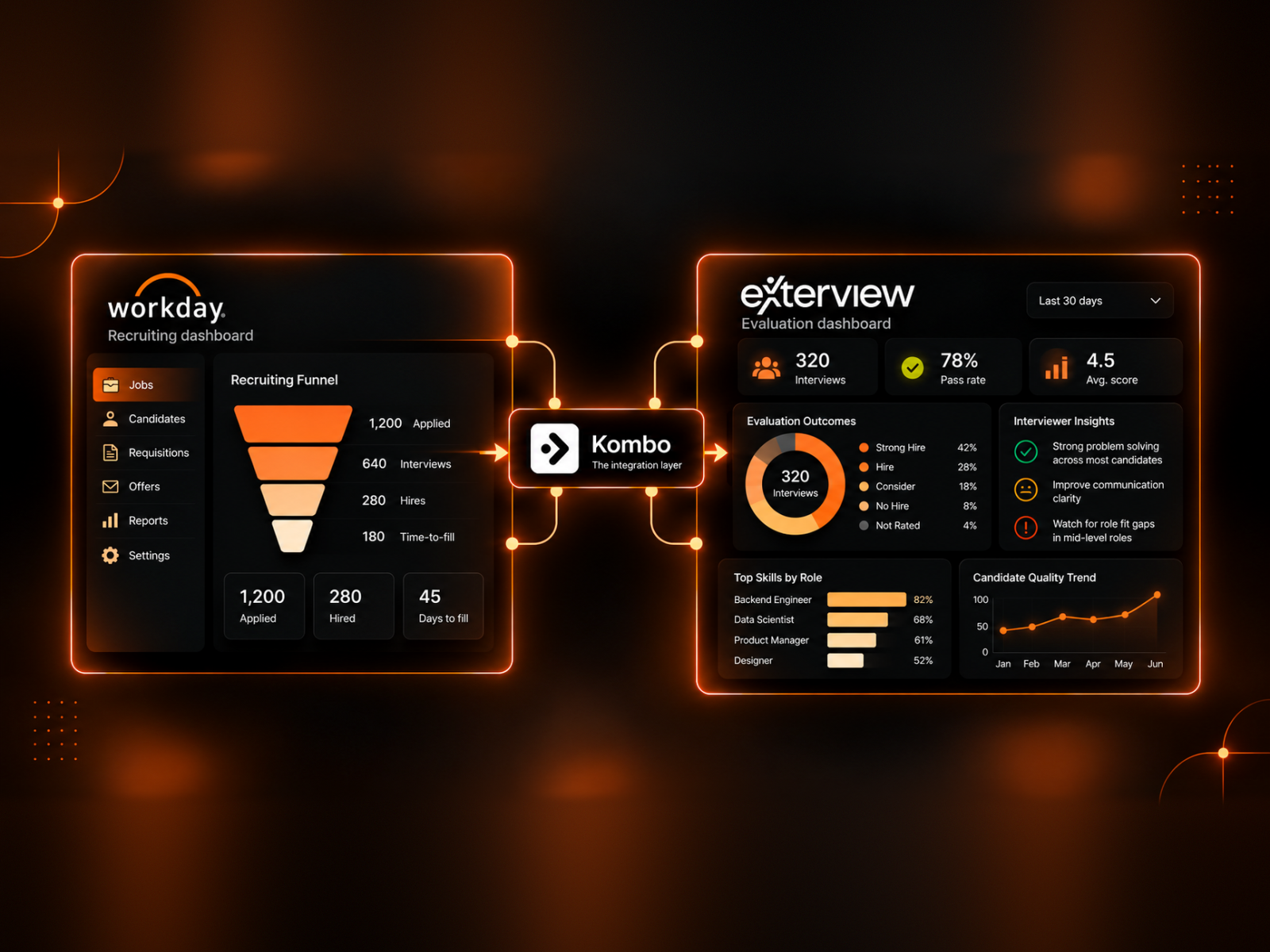
5. Bring Verification Into the Workflow: Run identity and background checks as part of the hiring flow and record relevant verification evidence alongside interview results. This creates a more complete and auditable candidate record. Exterview is an agentic talent intelligence platform for enterprise hiring that builds identity verification and real-time fraud alerts into the interview process itself, alongside ATS platforms such as Workday Recruiting. For regulated employers, compliance-grade AI hiring requires a broader approach to governance, evidence, and verification.
Frequently Asked Questions
What Is a Proxy Interview?
A proxy interview is a form of hiring fraud where someone other than the real applicant takes part in the job interview on their behalf, usually because they are more qualified. The real candidate then starts the job after receiving the offer, often without possessing the skills demonstrated during the interview.
How Common Is Candidate Fraud?
In a 2025 Gartner survey of 3,000 job candidates, 6% admitted to participating in interview fraud, either posing as someone else or having someone pose as them. Gartner also predicts that by 2028, one in four candidate profiles worldwide will be fake. Risk can be particularly significant in remote technical hiring.
Can AI Detect Deepfake Candidates?
AI tools can flag signals associated with deepfakes and proxy participation, such as mismatched audio and video, unusual facial movement, or inconsistent voice patterns across rounds. Detection works best when combined with identity verification against official documents and human review of any flags raised.
Won't Identity Checks Put Honest Candidates Off?
Most candidates can accept identity checks when they are explained clearly and completed quickly. Honest candidates also benefit from a process that is fair to everyone. Explain why checks exist, keep them lightweight, and handle personal data under clear consent and retention rules.
Who Should Own Hiring Fraud Prevention?
Hiring fraud prevention works best as a shared responsibility between talent acquisition, HR operations, and information security. TA owns the candidate experience and process design, while security defines risk thresholds and access controls for new hires with sensitive system access.
Conclusion
Remote hiring is not going away, and neither are the risks that come with it. Proxy interviews, real-time assistance, deepfakes, and fabricated credentials all exploit the same gap: most hiring stacks do not verify who is actually on the call. Closing that gap means identity checks at key stages, behavioral signals during interviews, and consistency checks across rounds.

Manish Surapeni