Recruiting Analytics on Workday: What Dashboards Miss
Discover where Workday recruiting analytics fall short and how evaluation-level insights can reveal deeper hiring signals for better decisions

Analytics Vs. Insights: Legacy Dashboards Show What Happened, Not Why
Most TA leaders can tell you their time-to-fill, their top sources, and how many offers went out last quarter. Far fewer can tell you why one hiring team consistently makes better hires than another, or which skills candidates keep falling short on. That's not a reporting failure. It's a data problem. Most recruiting analytics only see what's recorded in the system of record, while the evaluation itself is rarely captured in a structured way. In this article, you'll learn what Workday's recruiting analytics do well, the common gaps in legacy hiring dashboards, and how evaluation-level analytics fill them. Pasted markdown
TL;DR
Legacy tools like Workday give enterprises strong, configurable reporting on the hiring process, including volumes, stages, sources, and speed. What most dashboards can't show is the quality of evaluation behind those numbers because interview evidence is rarely captured in structured form. Evaluation-level analytics add that missing layer and can feed it back into Workday.
See what your dashboards can and can't answer with our 15-question recruiting analytics audit.
In This Article
- What recruiting analytics does Workday provide?
- What are the common gaps in legacy recruiting analytics?
- What does evaluation-level recruiting analytics add?
- How do you bring evaluation insights into Workday reporting?
- Frequently asked questions
- Conclusion
What Recruiting Analytics Does Workday Provide?
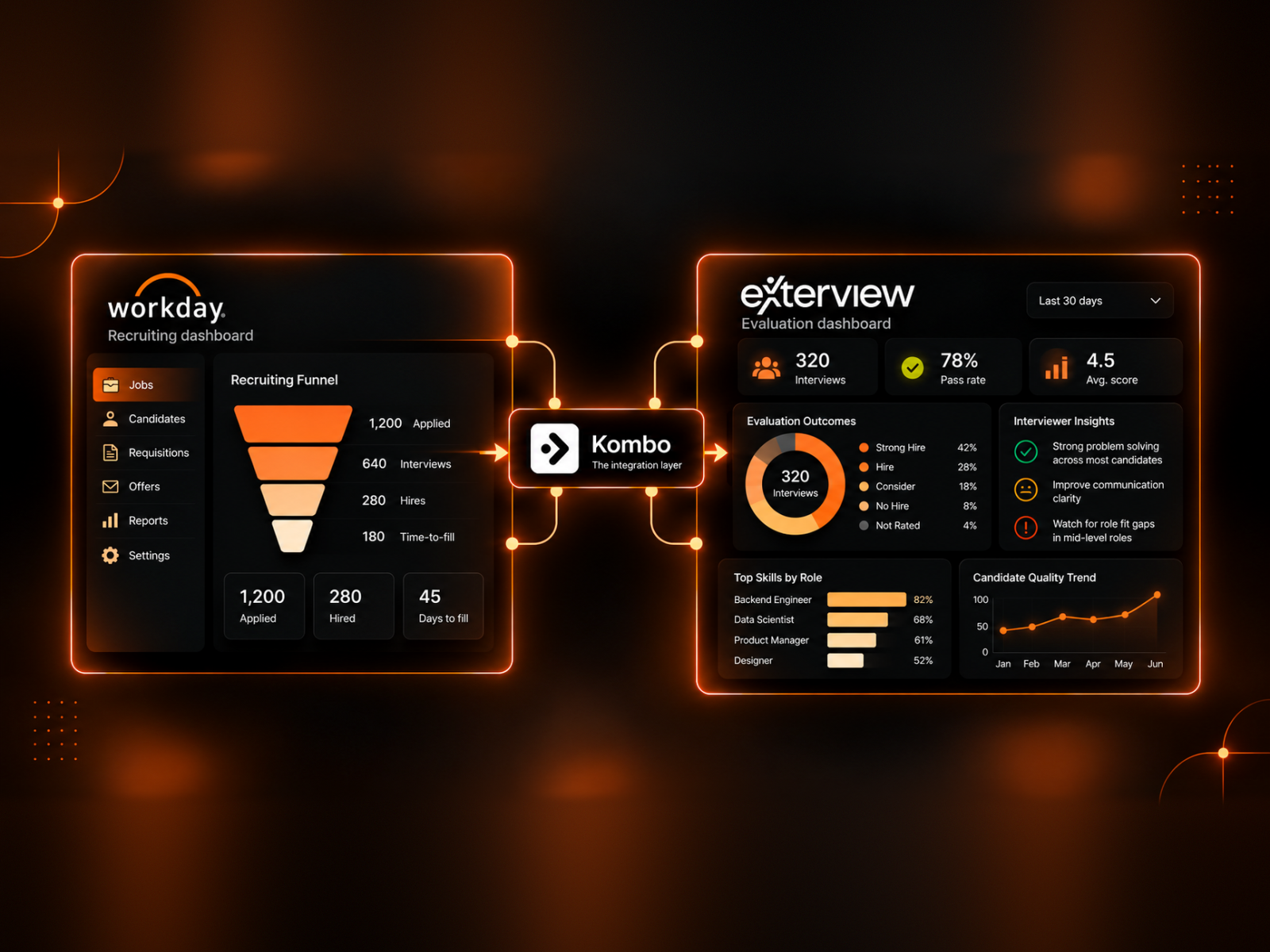
Workday provides prebuilt and configurable reports and dashboards inside the same system that stores your people data, covering recruiting volumes, pipeline stages, sources, and time-to-hire. Add-ons such as Prism Analytics and People Analytics extend this with blended external data and machine-learning insights.
This is a real strength. Because reporting sits on the system of record, the numbers are consistent with HR data, security follows existing roles, and recruiting metrics connect naturally to headcount and workforce planning. Workday's analytics and reporting offering also includes custom reports, Discovery Boards, and delivered dashboards.
For organizations that want more, Workday Prism Analytics lets teams blend Workday data with data from other systems, including external recruiting and assessment tools. Workday itself positions this as a way to understand measures like quality of hire by source. That detail matters, and we'll come back to it.
What Are the Common Gaps in Legacy Recruiting Analytics?
The most common gap in legacy recruiting analytics is that dashboards measure the hiring process, not the quality of hiring decisions. They report what happened, such as volumes, speed, and conversion, but rarely why, because structured evaluation evidence is missing from the underlying data.
Process Metrics, Not Quality Signals: Time-to-fill, source of hire, and stage conversion are useful operational metrics. But a fast, high-volume process can still produce poor hires. Most standard dashboards can't tell you whether shortlists are getting stronger or weaker.
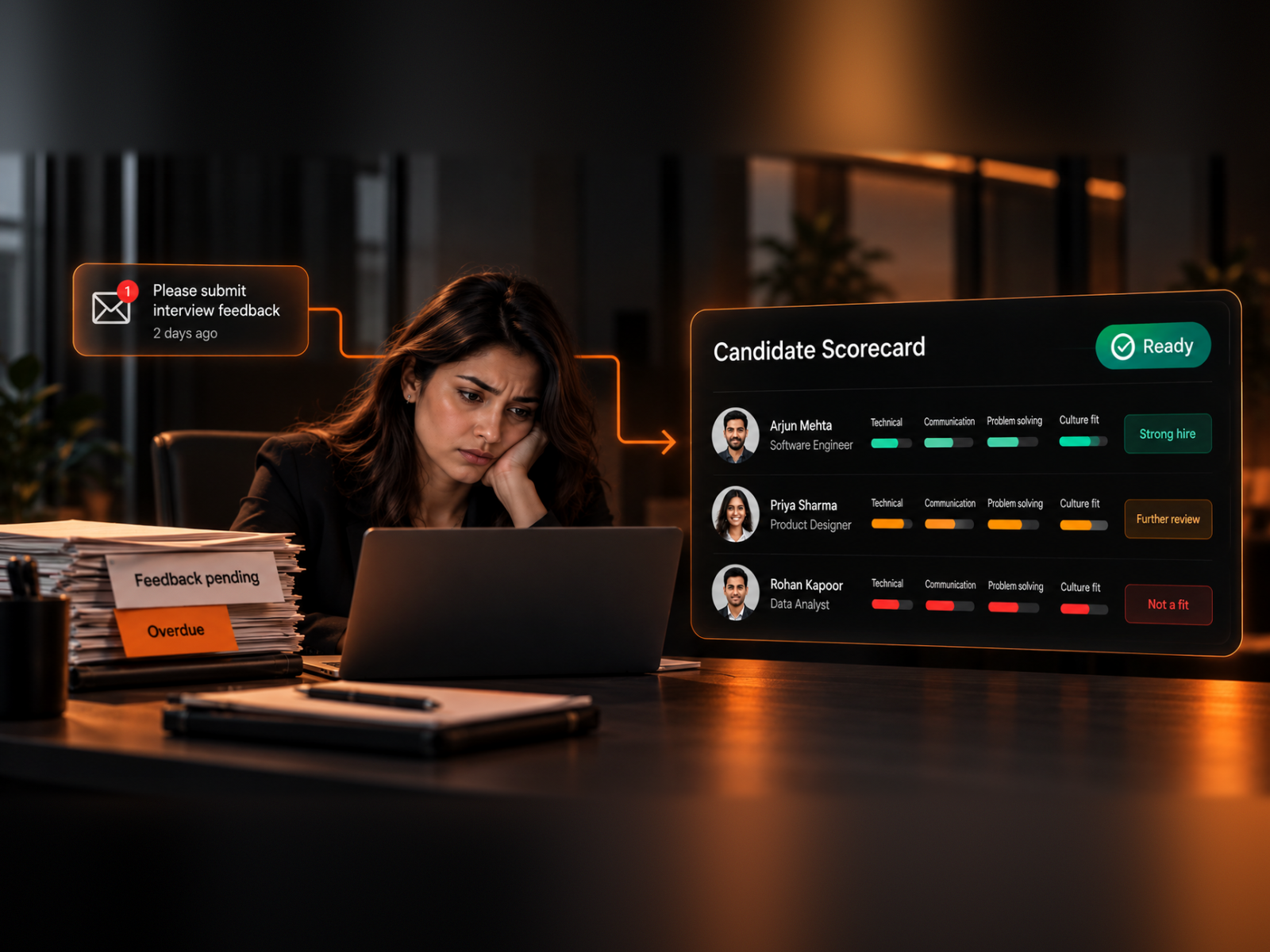
Only as Good as What Gets Typed In: Interview data in most ATS platforms comes from scorecards that interviewers fill in after the fact, often late, often with free text and an overall rating. When the input is inconsistent, the analytics built on it inherit that inconsistency.
Evaluation Happens Outside the System: Phone screens, panel conversations, and debriefs mostly happen outside the ATS. The system records the outcome, such as "advanced" or "rejected," but not the evidence behind it. You can't analyze what was never captured. This is the core of the gap between a system of record and structured candidate evaluation.
Custom Insight Needs Specialists: Going beyond standard reports usually means custom report writing, building datasets, or blending data from other tools. That's achievable, but it takes skilled people. Organizations leaning heavily on people analytics may need additional BI analyst or contract support.
Lagging, Not Leading: Quality of hire usually shows up months later, in performance reviews or early attrition. By then, the hiring decisions that caused it are long past and hard to trace.
Fairness Is Hard to See by Stage: Regulators increasingly expect employers to monitor adverse impact at each hiring stage, not just overall. Without structured stage-level data, that analysis becomes a manual, periodic exercise rather than something you can watch continuously.
Want to talk to our experts to find a fix? It only takes 20 mins. Book Now.
What Does Evaluation-Level Recruiting Analytics Add?
Evaluation-level recruiting analytics is reporting built on structured interview and assessment data, such as competency scores, rubric-based ratings, and interviewer patterns, rather than only on pipeline events. It explains why candidates advance or fall away, not just how many do.
The key is capturing evaluation in a structured way at the source. When every candidate goes through a structured interview built on clear job architecture, and every score is tied to a defined competency, the data becomes analyzable by default. Insights that used to require custom datasets become standard views.
Insights That Become Possible
Competency insight across candidate pools: See which skills candidates for a role family consistently score high or low on, and adjust sourcing or job requirements accordingly.
Interviewer calibration: Spot interviewers whose scores run consistently higher or lower than their peers, and coach them with evidence.
Source quality by demonstrated skill: Compare sources on how candidates actually performed in evaluation, not just how many were hired.
Stage-level fairness monitoring: Track pass-through rates and score distributions by stage to spot potential adverse impact early.
Integrity trends: See where identity or proxy-interview flags cluster by role, location, or source.
Explainable decision trails: Drill from any metric down to the individual scorecard, evidence, and reviewer behind it.
Custom Reporting Without Losing Flexibility
Every enterprise measures hiring a little differently. Evaluation-level analytics should let TA teams build views by role family, business unit, location, or hiring manager without writing code, and export data to the BI tools they already use, such as Power BI. Just as important, scores and evidence should sync back into Workday, so they can appear alongside native recruiting data and be blended in Prism where you use it.
Exterview is an agentic talent intelligence platform for enterprise hiring that captures structured evaluation data from AI interviews, assessments, and panel support, and turns it into analytics that work alongside Workday Recruiting.
How Do You Bring Evaluation Insights Into Workday Reporting?
To bring evaluation insights into Workday reporting, define the questions you need answered, capture evaluation in structured form at the source, sync scores and evidence back to Workday, build the views you need, and review them regularly with hiring teams.
1. Start With the Questions: List the five to ten hiring questions leadership actually asks, then check which ones your current dashboards can answer.
2. Structure Evaluation at the Source: Use competency-based interviews and rubrics so every score is comparable. This is where job architecture pays off.
3. Sync Results Back to Workday: Send scores, recommendations, and links to evidence into the candidate record, so Workday stays the system of record.
4. Build the Views You Need: Use delivered evaluation dashboards, Power BI, or Workday Prism to combine process and evaluation data.
5. Review With Hiring Teams Monthly: Share calibration and competency insights with hiring managers, and act on what you see.
Frequently Asked Questions
What Is Recruiting Analytics?
Recruiting analytics is the practice of measuring and analyzing hiring data to improve speed, cost, fairness, and quality of hire. It ranges from process metrics, such as time-to-fill and source of hire, to evaluation-level insights, such as competency scores, interviewer calibration, and stage-level adverse impact.
Can Workday Measure Quality of Hire?
Workday can report on hiring outcomes and, with Prism Analytics, blend in data from other systems to analyze measures like quality of hire by source. The quality of those insights depends on having structured evaluation and performance data to feed in, which many organizations don't capture consistently.
Do We Need Workday Prism Analytics for Deeper Recruiting Insights?
Not necessarily. Prism is useful if you want to blend many data sources inside Workday. An evaluation layer can deliver interview-level insights in its own dashboards and export to tools like Power BI, while also syncing key scores back into Workday reports.
Do We Need a BI Team to Get Evaluation-Level Insights?
Not if evaluation data is captured in structured form from the start. When interviews and assessments are competency-based by design, insights like skill gaps and interviewer calibration can be delivered as standard views, with BI teams needed only for advanced custom analysis.
Will Evaluation Data Appear in Our Workday Reports?
It can, if your evaluation layer syncs scores and recommendations back to the Workday candidate record. Confirm the integration details with any vendor, including which fields sync and how often, before relying on them in Workday reporting.
Conclusion
Workday gives enterprises a strong, consistent view of the hiring process, and Prism and People Analytics extend it further. The gap most TA teams feel isn't in the reporting tools. It's in the data underneath them. When evaluation happens in unstructured screens and free-text scorecards, dashboards can only show what happened, not why. Capturing evaluation in structured form, and feeding it back into Workday, turns recruiting analytics from a record of activity into a guide for better decisions.

Manish Surapaneni