Interview Feedback: How to Fix Slow, Vague Hiring Panels
Learn how AI panel intelligence can reduce delayed, vague feedback and help interview teams make faster, more consistent hiring decisions.

Interview Feedback: How AI Panel Intelligence Fixes Slow, Vague, and Inconsistent Hiring Panels
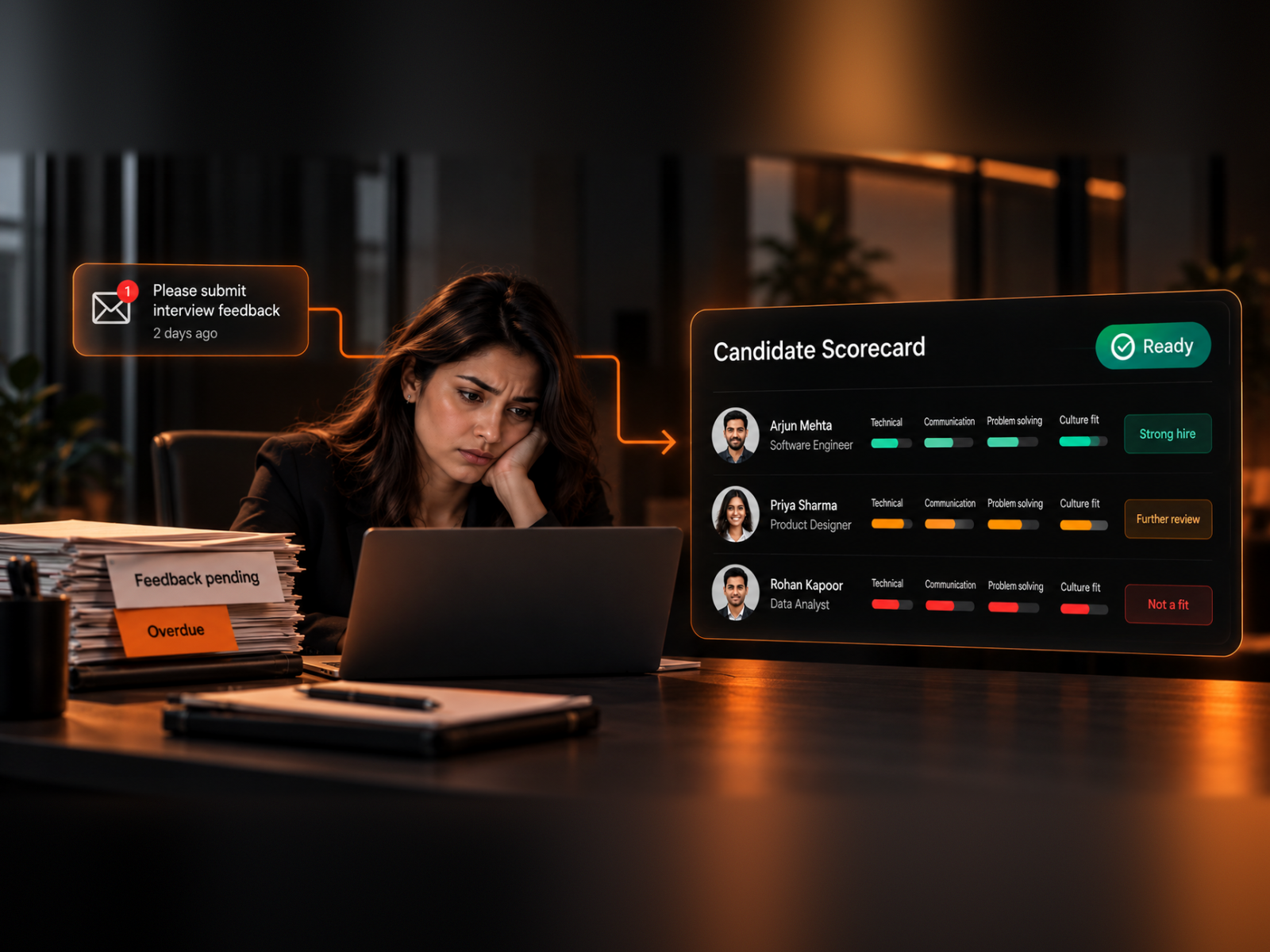
Every recruiter knows the routine. The panel finishes on Tuesday. By Thursday, half the interviewers still have not submitted their feedback, and what has arrived says, “good candidate, solid skills.” The debrief slips to next week, and your best candidate accepts another offer. In this article, you will learn why interview feedback breaks down, what good structured feedback looks like, and how AI panel intelligence takes the writing burden off interviewers.
TL;DR
Late, vague interview feedback is a hidden cause of slow hiring and inconsistentdecisions. It happens because busy interviewers write from memory hours later. Movingfeedback into the interview, with prompted questions, live summaries and a shared rubric, fixes it. Try our structured-feedback template with your next panel and see how much faster decisions come together.
In This Article
- Why is interview feedback so often late or vague?
- What does good interview feedback look like?
- How does AI panel intelligence improve interview feedback?
- Frequently asked questions
- Conclusion
Why Is Interview Feedback So Often Late or Vague?
Interview feedback is late or vague because interviewers do it on top of their real jobs, write it from memory hours after the interview, and often lack a shared rubric. Details fade quickly, so feedback drifts toward general impressions rather than specific evidence.
Interviewing Is a Side Job: Hiring managers and panelists interview alongside their day-to-day work. Writing detailed, structured feedback afterwards is tedious, so it gets rushed, delayed, or skipped. The result is often a short comment rather than useful evidence about what the candidate actually demonstrated.
Memory Fades Fast: The longer the gap between interview and feedback, the more feedback reflects first impressions. By the next day, specific answers blur. Interviewers may remember whether they liked a candidate but struggle to recall the exact evidence that led to their assessment.
Debriefs Become Debates: When written feedback is thin, decisions move to the debrief. Without shared evidence, the most senior or confident voice can often dominate the conversation, regardless of what the candidate actually demonstrated. A structured feedback process keeps the discussion focused on evidence.
What Does Good Interview Feedback Look Like?
Good interview feedback rates each competency the role requires, cites specific evidence for each rating, uses a shared scale, is submitted within an hour of the interview, and separates observations from opinions.
Tied to Competencies: Use one rating per skill from the role's competency framework rather than relying on one overall impression.
Evidence-Based: Include what the candidate said or did that supports each rating.
On a Shared Scale: Use clear descriptions of weak, acceptable, and strong performance so interviewers evaluate candidates consistently.
Fast: Ideally, feedback should be submitted within an hour of the interview while the conversation is still fresh.
Objective: Keep observations separate from subjective opinions such as “culture fit.”
Want to talk to our experts to find a fix? It only takes 20 mins. Book Now.
How Does AI Panel Intelligence Improve Interview Feedback?
AI panel intelligence improves interview feedback by moving it into the interview itself. It prompts interviewers with competency-based questions, drafts live notes and summaries, scores against a shared rubric, and flags biased language so complete feedback is ready when the interview ends.
Prompted Questions: Interviewers get suggested questions tied to the role's competencies. This helps every panelist cover what matters and avoid repeating questions already addressed by another interviewer.
Live Notes and Summaries: AI drafts notes and a structured summary as the conversation happens. Interviewers review and edit the output instead of writing everything from scratch after the interview.
Structured Scoring and Bias Prompts: Feedback is scored against a shared rubric, making it comparable across interviewers. Bias prompts can flag when comments drift toward subjective judgments rather than evidence. The goal is not to remove human judgment. It is to give interviewers a structured starting point and make the evidence easier to review.
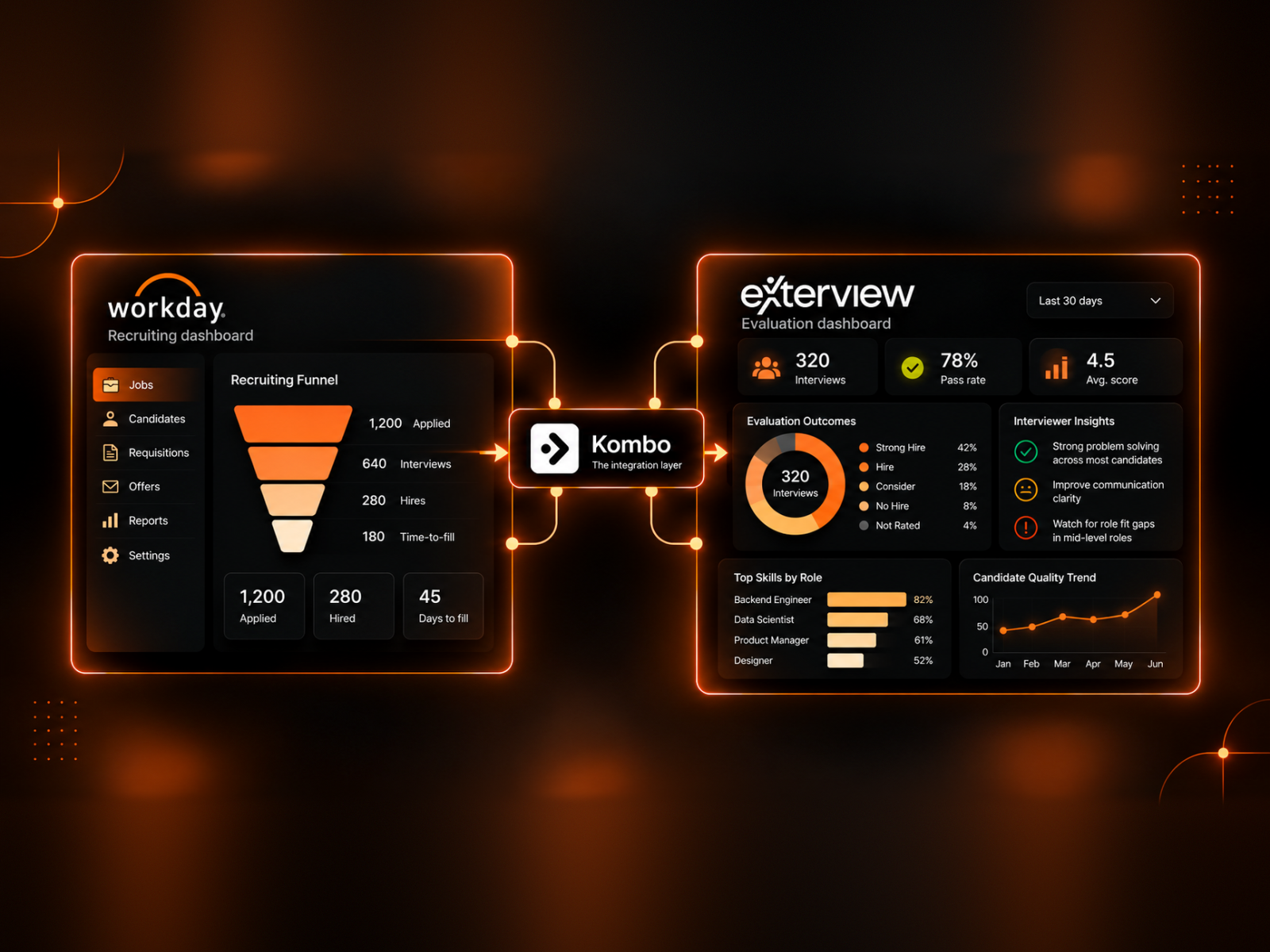
Faster Debriefs: With complete, comparable feedback ready when the interview ends, debriefs can focus on evidence and happen sooner. That also reduces the feedback chasing that consumes recruiter time. Exterview is an agentic talent intelligence platform for enterprise hiring whose panel intelligence agent supports human interviewers with real-time prompts, auto-generated summaries, and structured scorecards that flow into ATS platforms such as Workday Recruiting.
Frequently Asked Questions
How Soon Should Interview Feedback Be Submitted?
Ideally within one hour of the interview, and no later than the end of the same day. Feedback written quickly is more specific and evidence-based, while feedback written days later tends to reflect general impressions. Fast feedback also helps keep strong candidates moving through the process before they accept competing offers.
What Should an Interview Scorecard Include?
An interview scorecard should include a rating for each competency the role requires, a shared rating scale with clear descriptions, specific evidence supporting each rating, an overall recommendation, and space for questions to explore in later rounds. Ratings should never stand alone without supporting evidence.
Will Interviewers Accept AI-Generated Interview Notes?
Most interviewers can benefit from AI-generated notes when they can review and edit them before submitting. The AI drafts the notes and summary. The interviewer checks, corrects, and decides. This keeps human judgment in control while removing the most tedious part of the feedback process.
Does Recording Interviews Raise Privacy Concerns?
It can. Always obtain candidate consent, explain clearly how recordings and transcripts will be used, limit access to people involved in the decision, and follow retention rules that match your local privacy regulations.
How Much Faster Can Interview Feedback Become?
When feedback is drafted during the interview, teams can move from multi-day delays toward same-day submission because interviewers only need to review rather than write everything from scratch. The exact improvement depends on the existing workflow, panel structure, and level of automation.
Conclusion
Slow, vague interview feedback is not a discipline problem. It is a design problem. Asking busy interviewers to write detailed notes from memory hours later will always produce thin results. Structured rubrics, prompted questions, and AI-generated summaries move feedback into the interview itself, so decisions rest on evidence and happen faster.

Manish Surapeni