Workday Recruiting AI Evaluation for TA Leaders
Get more from Workday Recruiting with structured AI evaluation for better shortlists, faster decisions, and stronger hiring outcomes.

Workday Recruiting: A TA Leader’s Guide to AI Evaluation
If your organization runs hiring on Workday, you've already invested in a strongfoundation. Requisitions, approvals, offers and onboarding live in one connected system,and Workday's AI now helps with matching and candidate conversations. So why do somany Workday customers still struggle with inconsistent shortlists and slow decisions? Inthis guide, you'll learn what Workday Recruiting does well, where TA leaders typically findgaps, and how to add a specialist evaluation layer without disrupting your existing setup.
TL;DR
Workday is a strong foundation for enterprise recruiting, and its AI now coversmatching and candidate conversations. The opportunity is in what comes next: deeper,structured evaluation of the people behind the resumes. Want a second pair of eyes onyour setup? Book a free 20-minute stack review. No demo, just an honest look.
In This Article
- What Workday Recruiting does well
- Where the gaps usually appear
- How to add an evaluation layer to Workday
- Frequently asked questions
- Conclusion
What Workday Recruiting Does Well
Workday Recruiting gives enterprises one connected system for hiring and HR. Candidaterecords flow straight into employee records, approvals follow your business processes,and reporting covers the full lifecycle.
A Growing AI Portfolio: Workday has been building out its recruiting AI through acquisitions. HiredScore powersits Recruiting Agent for AI sourcing, screening and matching. Paradox powers itsCandidate Experience Agent, which handles conversational engagement and scheduling,and is particularly strong in high-volume frontline hiring.
One Source of Truth: For most enterprises, the biggest value of Workday is having everything in one place. Thatshould stay true. Any addition to the stack should strengthen Workday as the system ofrecord, not compete with it.
Where the Gaps Usually Appear
The gaps tend to appear after the shortlist. Matching tells you who looks right on paper.Conversational AI tells you who's available and interested. Neither tells you, in astructured and comparable way, who can actually do the job.
TA leaders on Workday most often mention these needs:
Structured First-Round Interviews: Candidates can complete structured voice or video interviews that are evaluated against a consistent rubric before recruiter or hiring-manager time is spent.
Role-Specific Assessment: Different roles require different evaluation methods. Engineering roles may require technical and coding assessments, while other positions may require domain knowledge, communication, behavioral, or situational evaluation.
Interview Integrity: Remote hiring introduces another consideration: knowing whether the person being evaluated is actually the candidate and whether the evaluation process can be trusted. Identity verification and integrity checks can help strengthen confidence in remote assessments and interviews.
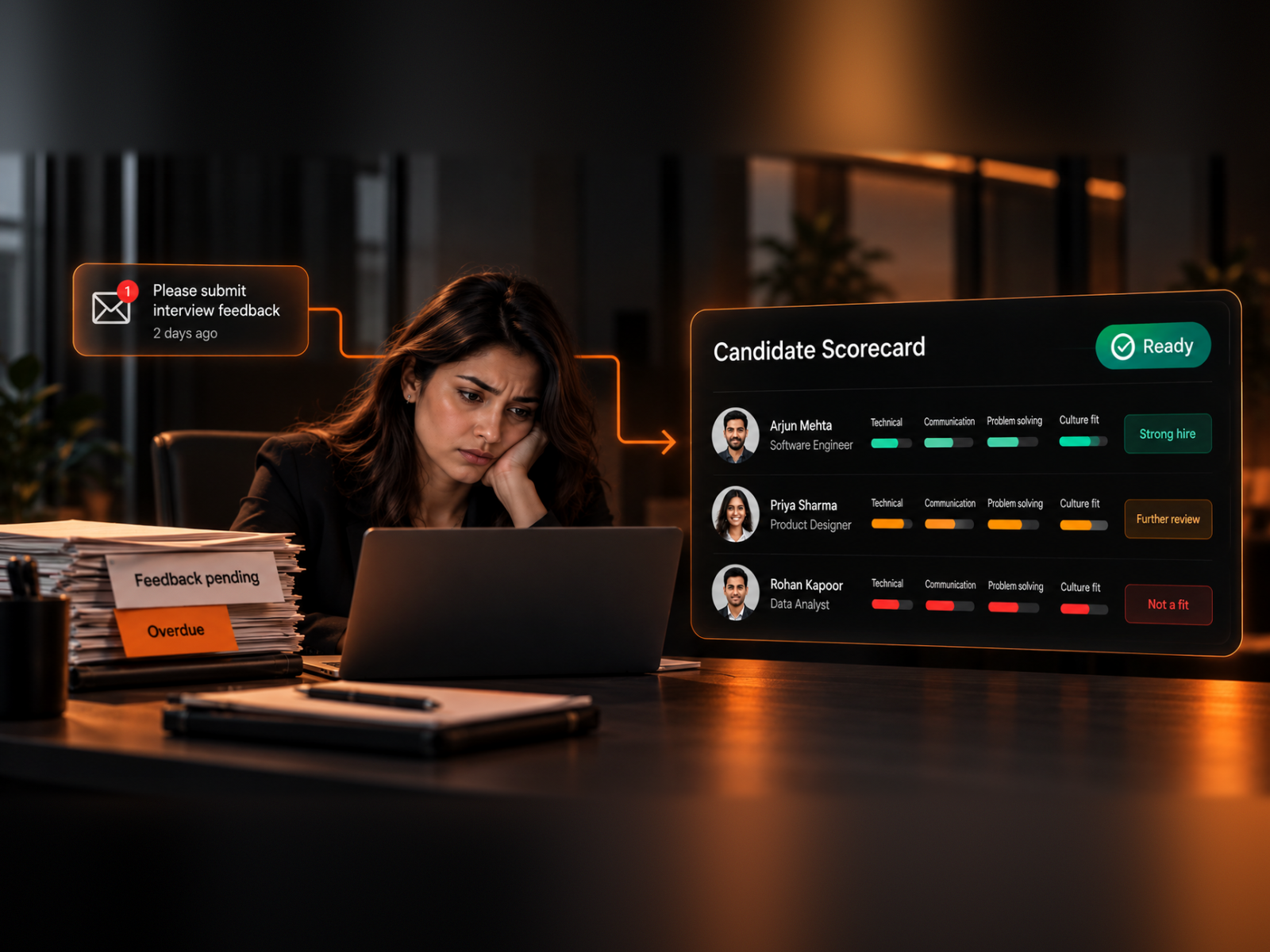
Panel Support: Panel interviews can produce large amounts of unstructured feedback. An evaluation layer can help turn interviewer notes and observations into structured, comparable feedback that is easier for hiring teams to review.
AI Governance: Enterprise hiring decisions increasingly require evidence. Organizations need to understand how candidates were evaluated, what criteria were applied, where human reviewers intervened, and how decisions can be explained or audited. This makes explainable scores, human sign-off, and recognized governance standards such as ISO 42001 increasingly relevant.
How to Add an Evaluation Layer to Workday
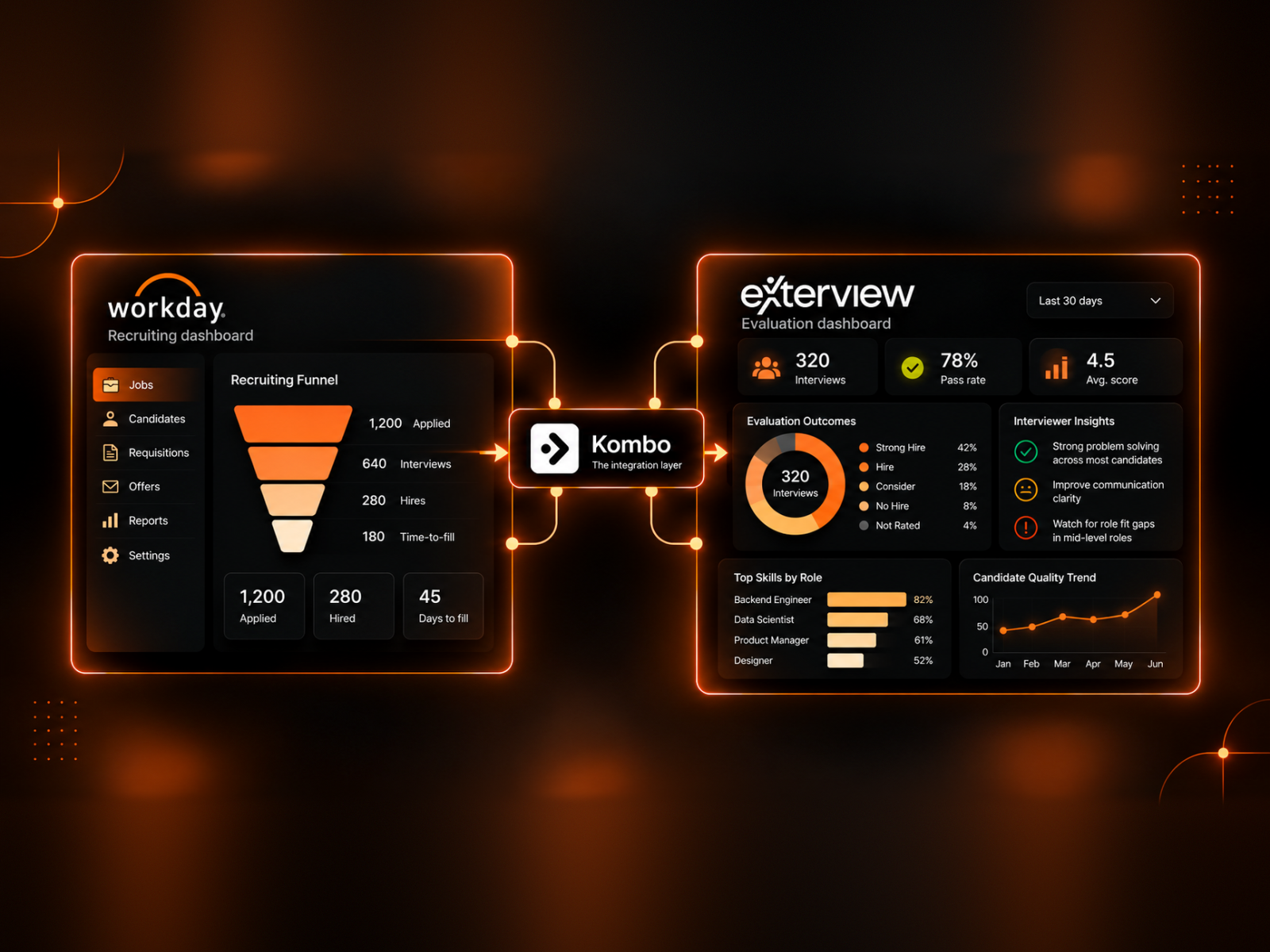
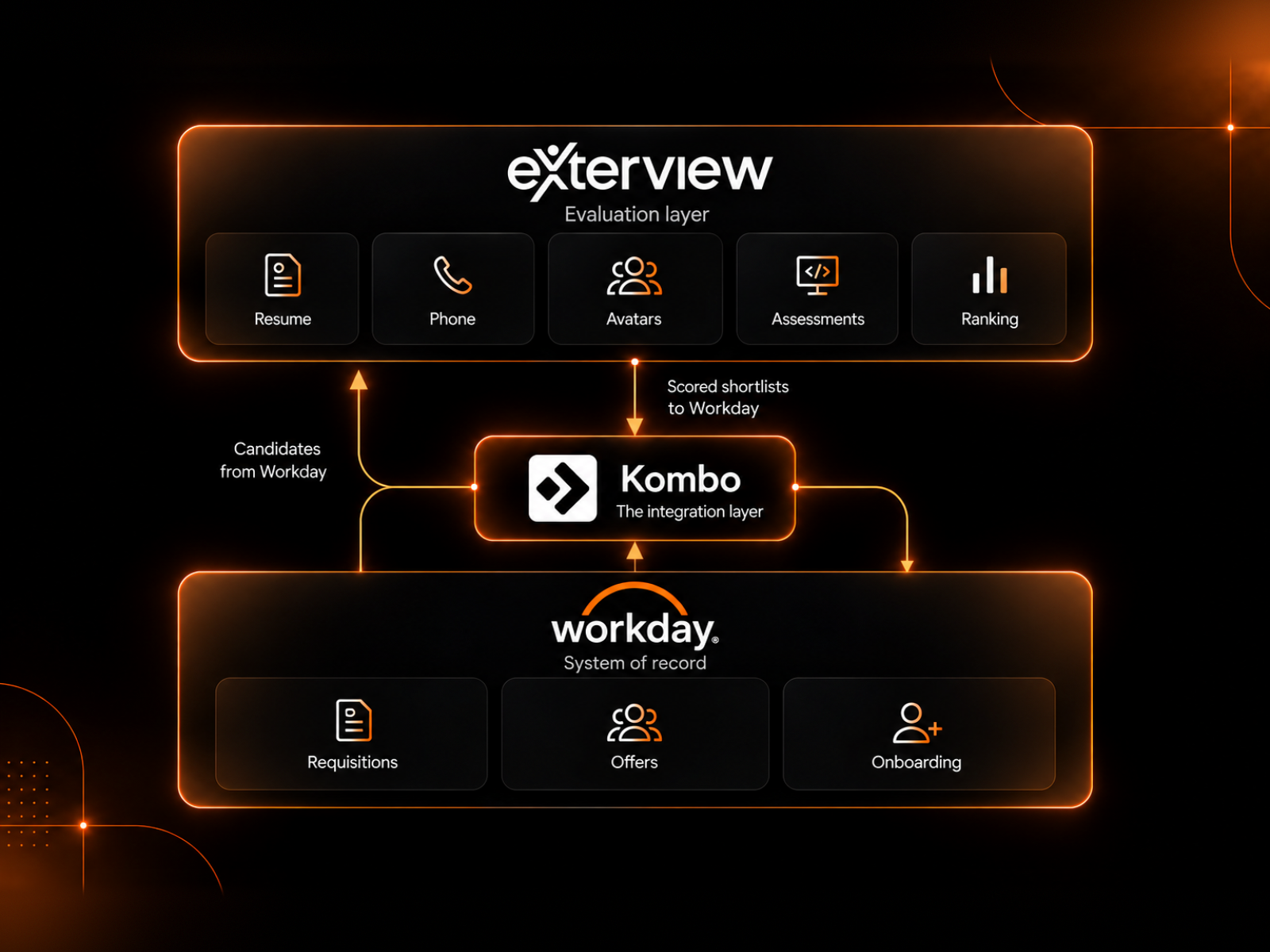
The principle is simple: Keep Workday as the system of record, and let a specialist evaluation layer feed scored, explainable shortlists back into it.
A practical implementation can follow five steps.
Step 1: Pick One Role Family
Start with a high-volume or high-stakes role family, such as graduate engineers, customerservice or relationship managers. This keeps the pilot focused and measurable.
Step 2: Define the Evaluation Standard
Turn the job profile into clear competencies, a qualification bar and an interview flow. Thisbecomes the rubric every candidate is measured against.
Step 3: Run Structured Evaluation at the First Stage
Shortlisted candidates complete structured AI interviews and assessments. Recruitersreceive ranked results with scorecards and recordings.
Step 4: Feed Results Back Into Workday
Scores, recommendations and evidence flow back into the candidate record, so recruitersand hiring managers keep working in Workday. Platforms like [Exterview] are designed forthis model, with AI agents for screening, interviews, technical assessment, verificationand ranking.
Step 5: Measure and Expand
Track time-to-shortlist, hiring manager satisfaction and quality-of-hire signals againstyour baseline, then expand to more role families.
Frequently Asked Questions
Does Workday already include AI interviews?
Workday's AI capabilities focus on areas such as matching, ranking, candidate conversations, and scheduling. Structured AI interviews and specialist assessments may be added through specialized partner solutions.
Will adding an evaluation tool create more work for our HRIS team?
A well-designed evaluation layer should reduce operational friction rather than create another disconnected workflow. Ask vendors for clear integration documentation, supported data flows, security requirements, and an implementation plan before starting.
Is this a replacement for HiredScore or Paradox?
Not necessarily. Matching, conversational engagement, and structured evaluation solve different problems within the recruiting workflow. Organizations can use these capabilities together rather than treating them as mutually exclusive.
How long does an evaluation-layer pilot usually take?
A focused pilot can typically run over several weeks on a single role family. The exact timeline depends on the role, evaluation requirements, integration scope, and organizational approval process.
What should we evaluate before adding an AI evaluation layer?
Look at the evaluation depth, integration model, scoring methodology, explainability, security, identity verification, governance capabilities, and how easily evaluation evidence can be accessed by recruiters and hiring managers.
Conclusion
Workday gives enterprises a strong, connected foundation for recruiting, and its AIportfolio keeps growing. The opportunity for most TA teams is deeper evaluation after theshortlist: structured interviews, specialist assessments, interview integrity andgovernance you can evidence. Adding a specialist evaluation layer lets you strengthenWorkday rather than replace it.

Manish Surapaneni